The right dress form can make fitting, draping, alterations, and pattern adjustments far more precise. The best choice depends on your size range, workflow, pinning needs, and available studio space.
We selected 10 dress forms for tailoring that cover adjustable sewing forms, pinnable torsos, display mannequins, and options for different budgets and body sizes.
Best 10 Dress Forms for Tailoring Picks for 2026
Best Overall Adjustability
Dritz Sew You Adjustable Dress Form
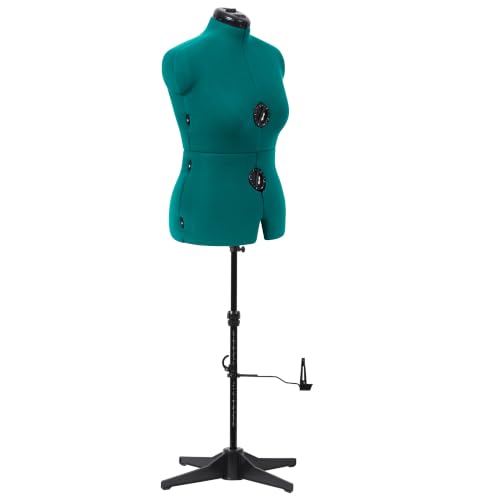
- 12 multi-point adjustments for customized fitting
- Adjustable height and 360-degree hem marker
- Fits approximate US women's sizes 12–18
Best For: Flexible home tailoring and repeatable fitting setups
Best Lightweight Tripod
Bonnlo Pinnable Dress Form with Wooden Base

- Pinnable linen-covered styrofoam torso
- Height adjusts from 60 to 75 inches
- Lightweight 6.4-pound wooden tripod design
Best For: Portable pinning and fitting for approximate sizes 14–16
Best for Fine-Tuned Torso Fitting

- 13 multi-point adjustments with 12 half-inch dials
- Torso length extends up to 2 inches
- Height adjusts to 66 inches with rotating hem marker
Best For: Detailed fitting of tailored garments in sizes 12–18
Precision Tailoring Pick
Dritz My Double Designer Adjustable Dress Form

- 12 adjustment wheels with inch/cm markings
- 360-degree hem marker and lockable rolling base
- Small size fits approximately US 4–14
Best For: Detailed fitting, draping, and tailoring work
Versatile Fitting Choice
SINGER Adjustable Dress Form Medium/Large

- 12 dials adjust the form for sizes 10–18
- Foam-backed flannel supports pinning
- Includes 360-degree hem guide and tool-free height adjustment
Best For: Alterations and medium-to-large sewing projects
Display-to-Draping Option
Adjustable Female Dress Form with Gold Stand

- Linen covering supports horizontal pinning
- Height adjusts from 49.6 to 73.2 inches
- Pole can be centered or offset for different garments
Best For: Displays, photography, décor, and basic garment pinning
Adjustable Purple Pick

- 13 adjusters for neck, bust, waist, hips, and back
- Pinnable flannel-and-sponge covering
- Up to 75-inch height with hem marker
Best For: Home sewists needing flexible sizing and easy hem marking
Studio-Ready Choice

- Canvas-covered foam body withstands pins
- 60–78-inch adjustable height
- Heavy-duty rolling metal base
Best For: Tailoring, draping practice, and professional garment display
Mobile Plus-Size Option

- 13 dials for customizable body measurements
- Cotton cover supports pinning and marking
- Removable, lockable rolling casters
Best For: Larger-size sewing projects requiring mobility
Best Overall Adjustability – Dritz Sew You Adjustable Dress Form
For sewists who need flexible fitting across a broader size range, this Dritz model is one of the more adaptable dress forms for tailoring. Its 12 adjustment points, height-adjustable pole, and hem marker support fitting, draping, pinning, and measuring for approximate US women’s sizes 12–18.
Best For: Tailors and home sewists fitting garments across multiple body measurements in the US 12–18 range.
Pros:
- 12 multi-point adjustments, including neck, torso, and side/back areas.
- Height adjusts to a maximum of 63 inches for improved shoulder-to-floor alignment.
- Foam-backed surface supports angled pinning, while the 360-degree hem marker helps with even hems.
- Measurement markings can be recorded on the adjustment wheels for repeatable setups.
Cons:
- Its stated size range is limited to approximate US women’s sizes 12–18.
- The form weighs 10.1 pounds, making it less convenient to move than lighter options.
The broad adjustment range and reusable measurement settings make this a practical choice when one form needs to accommodate changing projects or more than one wearer within its size range.
Best Lightweight Tripod – Bonnlo Pinnable Dress Form with Wooden Base
Bonnlo Female Dress Form Pinnable Mannequin Body Torso with Wooden Tripod Base Stand (Beige, 14-16)
Check Price On AmazonThis Bonnlo mannequin combines a pinnable linen-covered torso with a wooden tripod stand, making it a portable option among dress forms for tailoring. It is designed for approximate sizes 14–16 and offers adjustable height for fitting garments at different working levels.
Best For: Sewists who want a lightweight, easy-to-assemble form for pinning and basic garment fitting.
Pros:
- Styrofoam core with linen covering provides a finished pinnable surface.
- Height adjusts from 60 to 75 inches.
- Tripod stand is described as sturdy while the 6.4-pound weight keeps the form easy to move.
- Assembles and disassembles in minutes without tools.
Cons:
- The supplied measurements list two different body-measurement sets, so buyers should verify the intended fit.
- The torso is specified for approximate size 14–16 rather than a broad adjustable size range.
- Pins need to be inserted at an angle.
Its low weight and tool-free setup suit smaller workspaces, craft rooms, or sewists who need to reposition the form frequently. Check the listed measurements carefully before ordering.
Best for Fine-Tuned Torso Fitting – Dritz Twin-Fit Dress Form
The Dritz Twin-Fit is built for precise garment adjustments, with 13 multi-point body settings and 12 auto-set dials marked in half-inch increments. For dress forms for tailoring, its torso-length extension and adjustable height are especially useful when accurate proportions matter.
Best For: Intermediate and advanced sewists fitting approximate US women’s sizes 12–18 who want detailed torso control.
Pros:
- 13 adjustment points and 12 auto-set dials allow detailed measurement matching.
- Torso length extends by up to 2 inches for improved proportion control.
- Height adjusts to a maximum of 66 inches, and the hem marker rotates 360 degrees.
- Foam-backed surface supports pinning at multiple angles.
Cons:
- The listed adjustment range is approximate US women’s sizes 12–18.
- It is not presented as a full-body form, so some projects may require additional measurement checks.
Compared with a simpler fixed torso, the Twin-Fit offers more ways to refine length and circumference. It is a strong match for tailored garments where torso proportions and repeatable adjustments are priorities.
Best for Heavy Garment Display – EaseHome Adjustable Mannequin
With a detachable metal bracket and rectangular base, the EaseHome mannequin emphasizes stability and presentation rather than body-measurement adjustment. It can work as one of the dress forms for tailoring when the priority is displaying heavier garments, wedding gowns, or finished pieces.
Best For: Tailor shops, boutiques, craft shows, and home studios displaying garments on a stable base.
Pros:
- Metal bracket and solid rectangular base are designed to support heavier clothing and decorative materials.
- Height adjusts from 50 to 70 inches.
- Non-slip base is intended to improve stability and help avoid floor scratches when moving the model.
- Assembles and disassembles in about ten minutes without tools.
Cons:
- The torso measurements are fixed at a 33-inch chest, 26.4-inch waist, and 32.7-inch hips.
- The supplied notes emphasize display use rather than a pinnable fitting surface.
- It may be less suitable for detailed multi-size fitting than adjustable dress forms with body dials.
This model makes the most sense when load-bearing support and presentation are more important than precise body shaping. Its compact torso measurements should be checked against the intended garments before purchase.
Precision Tailoring Pick – Dritz My Double Designer Adjustable Dress Form
For serious dress forms for tailoring, the Dritz My Double Designer combines broad size adjustment with features aimed at accurate fitting and garment construction. Its rolling wheels, adjustable center pole, foam-backed pinning surface, and hem marker make it especially practical for detailed work on dresses, jackets, pants, and gowns.
Best For: Sewists who need extensive adjustment range, precise hem marking, and a movable form for tailoring projects.
Pros:
- 12 soft-grip rolling wheels adjust the bust, waist, and hips with inch and centimeter markings.
- Includes a 360-degree pin hem marker and a sturdy lockable rolling base.
- Center pole supports shoulder-to-floor matching, torso extension, and offset positioning for pants.
- Foam-backed surface supports secure pinning from multiple angles.
Cons:
- The Small form is intended for approximately US women’s sizes 4–14, so it may not suit larger measurements.
- Its extensive adjustment and rolling-base features may be more than casual sewists need.
This is the most tailoring-focused option in the group, particularly if you value measurement control and easy repositioning. Check the listed bust, waist, hip, and back-waist ranges before buying to confirm the Small size matches your projects.
Versatile Fitting Choice – SINGER Adjustable Dress Form Medium/Large
The SINGER Adjustable Dress Form is a straightforward choice among dress forms for tailoring, with 12 dials covering key body areas and a foam-backed flannel exterior for pinning. Its tool-free height adjustment and 360-degree hem guide support alterations, pattern draping, and everyday dressmaking.
Best For: Home sewists working on medium-to-large garments who want simple setup and adjustable fitting points.
Pros:
- Adjusts across sizes 10–18, with listed bust, waist, hip, and neck ranges.
- 12 dials allow the form to expand or contract for custom fitting.
- Foam-backed flannel exterior holds patterns and fabric for pinning.
- Includes a 360-degree hem guide and tool-free height adjustment.
Cons:
- The Medium/Large range may not fit smaller bodies or garments outside its listed measurements.
- The tripod base is less mobility-focused than a rolling base.
Choose this model if you want useful fitting adjustments without a more specialized studio-style setup. Its stated size range and included hem guide make it a practical option for alterations and general garment construction.
Display-to-Draping Option – Adjustable Female Dress Form with Gold Stand
KTMANEQ Adjustable Female Dress Form Mannequin with Golden Metal Stand for Clothes Window Display
Check Price On AmazonThis adjustable female dress form suits shoppers who want one mannequin for light tailoring, clothing display, and home or studio presentation. Its linen covering accepts horizontal pins, while the height-adjustable pole and central or offset placement allow skirts, dresses, pants, and shorts to be displayed or worked on.
Best For: Clothing displays, photography, décor, and basic pinning where a lightweight form with a stable decorative base is useful.
Pros:
- Linen-covered body allows horizontal pin insertion.
- Height adjusts from 49.6 to 73.2 inches.
- Center or side pole placement accommodates skirts, dresses, pants, and shorts.
- Heavy metal base is designed to remain stable while the form stays easy to move.
Cons:
- Listed body measurements are fixed at approximately a 33.8-inch bust, 24.8-inch waist, and 32.6-inch hip.
- The notes do not list body-width adjustment dials, limiting precise size fitting compared with dedicated tailoring forms.
- Its display-oriented design may be less suitable for advanced custom fitting.
This model is better viewed as a flexible display mannequin with pinning capability than as a fully adjustable tailoring form. It makes sense when appearance, height range, and easy assembly matter as much as garment fitting.
Adjustable Purple Pick – Purple Adjustable Dress Form
For dress forms for tailoring, this adjustable purple mannequin is a practical option when you need flexible sizing and a pinnable surface. Its 13 adjusters cover key areas from the neck through the hips, while the height adjusts up to 75 inches.
Best For: Home sewists and tailors who need adjustable sizing, easy pinning, and a hem-marking guide.
Pros:
- Thirteen adjusters customize the neck, bust, waist, hips, and back.
- Flannel fabric with a sponge layer supports pinning and marking.
- Includes a calibrated pole and 360-degree pin-grip hem marker.
- Tool-free assembly and a stable four-footed base simplify setup and use.
Cons:
- Its listed sizing range is dress sizes 4–16, so measurements should be checked before purchase.
- The plastic construction is lightweight rather than especially heavy-duty.
This form stands out for combining broad adjustability with a hem guide and a bright finish. Measure carefully first, then use the adjustment dials to approximate the intended fit.
Studio-Ready Choice – Bonnlo Size 6 Dress Form
Among dress forms for tailoring, the Bonnlo Size 6 model favors a professional, stable setup. Its foam-and-canvas torso provides a surface that can withstand pins, while the adjustable height and rolling metal base support both garment work and display.
Best For: Tailors, draping students, and makers who want a sturdy, movable form in a fixed Size 6 profile.
Pros:
- Flexible PU foam, styrofoam, and canvas construction is suitable for pinning.
- Height adjusts from 60 to 78 inches.
- Heavy-duty metal base supports the torso and heavier outfits.
- Four rolling wheels make the mannequin easier to reposition.
Cons:
- It is a Size 6 form rather than a multi-size adjustable torso.
- The model is sold without arms.
- At 17.5 pounds, it is less lightweight than some portable dress forms.
The Bonnlo is a strong fit when stability matters more than compact portability. Its stated Size 6 measurements make it important to compare the bust, waist, and hip dimensions with the intended garment block.
Mobile Plus-Size Option – Gray Adjustable Dress Form
For dress forms for tailoring in a larger listed range, this gray adjustable mannequin offers 13 adjustment dials and a cotton-covered pinnable body. Its detachable rolling base makes it useful when you need to move between sewing, display, and storage areas.
Best For: Sewists working with dress sizes 12–18 who value adjustable measurements and a mobile base.
Pros:
- Thirteen adjustment dials cover the chest, waist, hips, back, and height.
- Stretchable 100% cotton covering is suited to pinning and marking.
- Removable casters and a four-leg base support mobility and stability.
- Lockable casters help keep the form stationary during work.
Cons:
- The stated height range is approximately 42.5–60 inches, which may not suit every setup.
- Its listed measurements should be verified carefully because the product details include inconsistent chest and waist specifications.
- The rolling base requires enough floor space to maneuver.
This model is appealing for adjustable, larger-size sewing projects where repositioning the form is part of the workflow. Confirm the product measurements and desired height before ordering.
How We Picked These Dress Forms for Tailoring
We focused on practical features that affect real sewing work: adjustable sizing, measurement controls, pinnable surfaces, height flexibility, stand stability, and ease of use. We also considered whether each form is better suited to garment construction, fitting and alterations, pattern draping, or visual display.
Because dress forms vary widely in shape and adjustment range, the listed size is only a starting point. A form that covers your target measurements and supports your preferred fitting method is generally more useful than one with a longer list of decorative features.
Quick Comparison
| Best For | Look For |
|---|---|
| Home sewing and alterations | Adjustable bust, waist, and hip settings |
| Draping and pin fitting | Pinnable foam or fabric-covered body |
| Multiple garment sizes | A broad, clearly marked adjustment range |
| Displays and photography | Attractive finish and a stable stand |
| Limited studio space | Height-adjustable, compact tripod or metal base |
Key Buying Factors for Dress Forms for Tailoring
Size and Adjustability
Measure the intended wearer rather than relying only on clothing size. Compare bust, waist, and hip measurements with the form’s minimum and maximum settings. Adjustable dials are valuable when you sew for several people, but they may not reproduce every body shape equally well.
Pinnability and Surface Construction
If you drape fabric or mark seam lines directly on the form, choose a fabric-covered, pinnable model with enough padding for secure pins. Smooth display mannequins can look polished but are less practical for hands-on fitting.
Stand, Height, and Stability
Check the stand material, base footprint, and height range. A stable base matters when working with heavier fabrics or pulling garments over the form. Adjustable height is especially helpful for matching a client’s shoulder level or working while seated.
Measurement Controls
Adjustable forms with visible measurement markers can speed up setup, but they should still be checked with a tape measure. Look for a hem marker or waist-level reference if you regularly make skirts, dresses, or coats.
Who Should Buy Which Dress Forms for Tailoring?
Choose an adjustable sewing form if you make garments in several sizes or need to accommodate changing measurements. A pinnable torso is the better fit for draping, tailoring details, and frequent pinning. Beginners may prefer a straightforward, stable form with easy-to-read adjustments, while experienced sewists may value a wider range and more precise controls.
If the main goal is staging clothing, photographing finished pieces, or creating a window display, prioritize appearance, base stability, and height over sewing-specific padding. For professional tailoring, match the form as closely as possible to the client’s measurements and use it alongside live fittings rather than as a complete substitute.