The right dress form can make draping, fitting, and pattern development faster and more accurate. Whether you sew occasional garments or develop designs professionally, the best choice depends on adjustability, pinnability, stability, and size range.
We compared 10 dress forms for draping, from adjustable full-size models to a compact half-scale form and specialty options with arms or display-focused stands. Use the guide below to match the form to your workflow and budget.
Best 10 Dress Forms for Draping Picks for 2026
Best Adjustable Fit
Dritz Twin-Fit Adjustable Dress Form

- 13 multi-point body adjustments
- Adjustable torso, height, and hem marker
- Foam-backed surface for angled pinning
Best For: US sizes 12–18 and detailed garment fitting
Best Lightweight Display Form

- Lightweight 4-pound foam torso
- Height adjusts from 60 to 67 inches
- Tool-free assembly and pinnable fabric cover
Best For: Boutique display, photography, and basic draping
Best Value for Mid-Range Sizes
Dritz Sew You Adjustable Dress Form
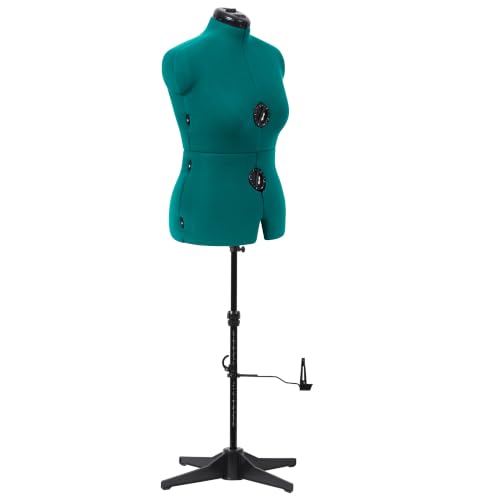
- 12 adjustment points for flexible fitting
- Recordable wheels and adjustable height
- Foam-backed surface with 360-degree hem marker
Best For: US sizes 12–18 and repeatable sewing setups
Best for Petite Display

- Petite size 6–8 proportions
- Height adjusts from 60 to 75 inches
- Pinnable styrofoam body with linen cover
Best For: Petite garment display and light draping
Best for Easy Setup
SINGER Female Adjustable Dress Form

- 12 dials adjust neck, bust, waist, hips, and height
- Foam-backed flannel surface supports pinning
- Includes a 360-degree hem guide
Best For: Size 10–18 sewing, draping, alterations, and hemming
Best Foam Draping Body

- High-density PU foam supports angled pinning
- Height adjusts from 55 to 70 inches
- Heavy-duty iron base supports clothing
Best For: Size 6 draping practice, pinning, and garment display
Best Mobile Adjustable Form
Black Female Adjustable Dress Form

- 13 adjustment wheels customize the body and height
- Rolling base has detachable, lockable casters
- Cotton cover supports pinning and marking
Best For: Mobile sewing, draping, fitting, and clothing display
Best Miniature Option
Half-Scale Dress Form for Draping

- Fully pinnable half-scale surface
- Lightweight, portable PVC construction
- Designed for miniature draping and display
Best For: Half-scale design practice and miniature garments
Best Full-Size Workstation
Adjustable Female Dress Form for Draping

- Fully pinnable foam-and-canvas body
- Height adjusts from 60 to 78 inches
- Stable wheeled metal base
Best For: Full-size tailoring, draping, and garment display
Best Sleeve Accessory
Soft Arm Dress Form for Draping

- Fully pinnable cotton-and-linen arm
- Bendable pearl-cotton interior
- Suitable for steaming and ironing
Best For: Sleeve shaping and arm-specific draping work
Best Adjustable Fit – Dritz Twin-Fit Adjustable Dress Form
The Dritz Twin-Fit is a practical choice among dress forms for draping when you need broad measurement flexibility. Its 13 adjustment points, 12 half-inch-marked dials, adjustable torso length, and height-adjustable pole help bring the form closer to a wearer’s proportions.
Best For: Sewists working with approximate US women’s sizes 12–18 who want detailed fitting adjustments for draping and garment construction.
Pros:
- 13 multi-point adjustments accommodate bust, waist, hips, neck, and other measurements.
- Torso length extends up to 2 inches, while the center pole adjusts to a maximum height of 66 inches.
- Foam-backed surface supports pinning at multiple angles.
- Includes a 360-degree adjustable hem marker and sturdy stand.
Cons:
- Its listed size range is limited to approximate US sizes 12–18.
- The plastic construction may not suit shoppers seeking a rigid professional mannequin.
Choose this model if accurate customization is more important than a fixed display form. The combination of torso-length adjustment, numerous dials, and a hem guide makes it especially useful for fitting and draping projects.
Best Lightweight Display Form – FDW Female Mannequin Torso
The FDW female mannequin torso is a straightforward option among dress forms for draping, especially when portability and presentation matter. Its foam body, fabric cover, wood tripod, and 7-inch height adjustment support light sewing, display, photography, and home-decor use.
Best For: Boutique displays, photography, and lightweight pinning projects using a compact standard-size torso.
Pros:
- High-density foam body and fabric cover provide a pinnable surface.
- Height adjusts from 60 to 67 inches.
- Lightweight 4-pound design is easy to move.
- Assembles and disassembles without tools.
Cons:
- Fixed measurements—34.6-inch chest, 25.6-inch waist, and 33.8-inch hips—offer less fitting flexibility.
- It is better suited to standard-size display and light tailoring than detailed custom fitting.
- The warranty is listed as 90 days.
This form makes sense when you need an easy-to-transport mannequin for display or basic draping rather than extensive body-shape adjustment. Its adjustable height adds useful flexibility, but the torso measurements remain fixed.
Best Value for Mid-Range Sizes – Dritz Sew You Adjustable Dress Form
The Dritz Sew You is a versatile selection among dress forms for draping, with 12 body adjustments and a height-adjustable center pole. Its nine side and back wheels, front auto-set dials, foam-backed surface, and hem marker are designed for repeatable fitting and pinning.
Best For: Sewists working in approximate US sizes 12–18 who want adjustable fitting features and a recordable setup.
Pros:
- 12 adjustment points help accommodate changing body measurements.
- Nine smooth-rolling wheels and three additional dials provide hands-on control.
- Height adjusts to a maximum of 63 inches for shoulder-to-floor matching.
- Measurements can be marked on the wheels for repeatable setups.
Cons:
- The listed approximate size range is limited to US sizes 12–18.
- Its maximum height is lower than the Twin-Fit model in this roundup.
- Adjustment requires manually setting multiple wheels and dials.
This is a strong fit for makers who want substantial adjustability without moving to a larger specialized form. The ability to record settings is particularly helpful when alternating between projects or fitting more than one person.
Best for Petite Display – Bonnlo Adjustable Dress Form
The Bonnlo adjustable dress form is a petite-sized option among dress forms for draping and clothing display. Its linen cover and styrofoam body allow pinning, while the rubber-wood tripod and stainless-steel tube provide a stable, height-adjustable base.
Best For: Displaying and lightly draping garments in approximately size 6–8, including clothing, jewelry, and decorative pieces.
Pros:
- Designed for approximate size 6–8 proportions with a 34.2-inch bust and 25.4-inch waist.
- Height adjusts from approximately 60 to 75 inches.
- Styrofoam body permits pinning through the linen cover.
- Lightweight and assembles without tools.
Cons:
- It is not a multi-point adjustable fitting form.
- The size range is narrower than the adjustable Dritz models.
- Care is needed when moving it; the instructions recommend holding the wood part.
Select this model when petite proportions and display versatility are priorities. Its tall height range and pinnable body are useful for presentation and basic draping, but it is less suited to detailed custom fitting.
Best for Easy Setup – SINGER Female Adjustable Dress Form
For dress forms for draping, the SINGER Medium/Large model is a practical choice when you need broad size adjustability and a surface that accepts pins. Its 12 dials cover key areas from the neck through the hips, while the included hem guide supports more precise finishing work.
Best For: Sewists working across sizes 10–18 who want an adjustable form for pattern draping, fitting, alterations, and hemming.
Pros:
- 12 dials adjust the neck, bust, waist, hips, and overall fit.
- Foam-backed flannel exterior holds pins securely.
- Includes a 360-degree hem guide and tool-free height adjustment.
- Assembles without tools and can also display finished garments.
Cons:
- The listed Medium/Large range is limited to sizes 10–18.
- Its 11-pound weight may be less convenient to move frequently.
The SINGER stands out for its combination of extensive adjustment points, pinnable fabric, and built-in hem guidance. It is especially useful when one dress form needs to accommodate several measurements within its stated range.
Best Foam Draping Body – Female Dress Model Torso Form
For dress forms for draping, this beige foam body offers a fixed female shape with a fully pinnable exterior. Its adjustable stand changes the overall height from 55 to 70 inches, making it suitable for design practice, cutting, and garment display.
Best For: Beginners, students, and makers who want a lightweight foam form for pinning, draping practice, and presenting clothing.
Pros:
- High-density PU foam allows pinning at an angle.
- Adjustable height accommodates a 55- to 70-inch setup.
- Heavy-duty iron base and upgraded metal stand provide support.
- Canvas covering is designed to help position clothing without sticking.
Cons:
- The listed body measurements correspond to a size 6 form rather than an adjustable size range.
- Manual measurements may have approximately 0.5 cm of tolerance.
- The 7.35 kg weight is heavier than some portable foam forms.
This model favors a stable, pinnable foam torso over extensive body-shape adjustment. Its stated size 6 measurements and height-adjustable stand make it a focused option for smaller-size draping and display work.
Best Mobile Adjustable Form – Black Female Adjustable Dress Form
For dress forms for draping, this black adjustable mannequin emphasizes mobility as well as fit customization. Its 13 adjustment wheels alter the body and height, while the four-leg rolling base can be moved or locked in place during sewing and display.
Best For: Sewists and clothing displays that benefit from an adjustable form with lockable casters and a movable base.
Pros:
- 13 adjustment wheels customize chest, hips, waist, back, and height.
- Rolling base improves mobility and includes lockable casters.
- 100% cotton cover is suitable for pinning and marking.
- Tool-free assembly and disassembly can be completed in minutes.
Cons:
- The listed size is Small, with a stated size range of 6–14.
- The product details list a 25.5-inch chest measurement and 32-inch waist, so buyers should verify fit carefully.
- The rolling base requires floor space and may be unnecessary for stationary work.
This form is a strong fit when repositioning the mannequin is part of the workflow. Its adjustable body, cotton covering, and lockable rolling base combine fitting functionality with practical shop or home display use.
Best Miniature Option – Half-Scale Dress Form for Draping
For design students, sample makers, and anyone practicing on a small scale, this half-size form offers a portable way to work with dress forms for draping. Its fully pinnable surface supports miniature garment construction, cutting practice, and display work, but its 1:2 dimensions are not suitable for adult-size garments.
Best For: Half-scale draping practice, design training, miniature garments, and compact displays.
Pros:
- Fully pinnable and suitable for angled pinning.
- Lightweight PVC construction with a heavy-duty iron base.
- Useful for cutting, draping practice, and displaying small garments or jewelry.
- Simple assembly with a metal pole, round base, and tightening knob.
Cons:
- Half scale only; it is not an adult full-size dress form.
- Limited dimensions make it unsuitable for full-size fitting.
This is a practical choice when portability and miniature practice matter most. Confirm the listed measurements before ordering, especially if you need a standard adult dress form.
Best Full-Size Workstation – Adjustable Female Dress Form for Draping
This size 6 Bonnlo mannequin is a practical pick for sewists who want full-size dress forms for draping, tailoring, and garment display. Its pinnable foam-and-canvas body, adjustable height, and wheeled metal base create a stable but movable setup for working with adult garments.
Best For: Full-size draping, tailoring, cutting practice, and professional-style garment display.
Pros:
- Flexible PU foam, styrofoam, and canvas construction can withstand pins.
- Height adjusts from 60 to 78 inches.
- Heavy-duty metal base includes four rolling wheels for easier movement.
- Canvas texture helps position clothing without sticking to fabric.
Cons:
- Size 6 measurements may not suit every body or pattern size.
- The 17.5-pound construction is less portable than a lightweight tabletop form.
- Sold without arms, which may limit sleeve-focused draping.
Choose this model if you need an adjustable adult torso with a stable base for repeated studio use. Review the bust, waist, and hip measurements carefully before selecting it for a specific pattern block.
Best Sleeve Accessory – Soft Arm Dress Form for Draping
For sleeve construction and arm-specific work, this soft arm accessory expands what dress forms for draping can handle. The cotton-and-linen arm is fully pinnable, bendable, and designed to attach to a dress form with pins, making it useful for shaping and testing long sleeves.
Best For: Sleeve draping, armhole work, long-sleeve fitting, and steam-setting sleeve shapes.
Pros:
- Fully pinnable and quickly fixed to a dress form with pins.
- High-resilience pearl cotton can be bent into position.
- Can be steamed and ironed directly on the arm.
- Red band helps indicate a working area during stitching.
Cons:
- Pins are not included.
- It is an arm accessory rather than a complete dress form.
- Listed dimensions and sizing information should be checked for compatibility with your mannequin.
This arm is a useful complement to a compatible full-size mannequin when sleeves are the main challenge. It will not replace a torso, but its heat-tolerant, bendable construction adds flexibility for detailed sleeve draping.
How We Picked the Best Dress Forms for Draping
We focused on the features that affect real-world draping and fitting: measurement adjustability, pin-friendly surfaces, torso shape, stand construction, height range, and overall usability. We also included different form styles because a home sewist, fashion student, tailor, and display-focused buyer may need very different equipment.
Adjustable models earned consideration for serving multiple sizes, while fixed-size and half-scale forms remain useful when stability, portability, or a particular fitting block matters more than versatility. Specialty choices were included only where their design solves a clear problem, such as sleeve draping or small-scale pattern development.
Quick Comparison
| Form type | Best for | Main advantage | Watch for |
|---|---|---|---|
| Adjustable full-size | Multi-size sewing | Flexible measurements | Adjustment gaps and less natural contours |
| Fixed-size torso | Consistent fitting or display | Stable, straightforward shape | Limited size flexibility |
| Half-scale | Students and small workspaces | Uses less fabric and space | Not suitable for full-size garment fitting |
| Full-size form with arm | Sleeves and armholes | Supports more complex draping | Requires additional workspace |
Key Buying Factors for Dress Forms for Draping
Size and Adjustability
Choose a form that covers your most common bust, waist, and hip measurements. Adjustable dials can make one form useful across several sizes, but verify how evenly the form expands and whether the adjustment points create large gaps. A fixed-size form is often better for precise repeat fitting within one size.
Pinnability and Surface Construction
For draping, the surface should accept pins securely without excessive resistance. Foam-backed or fabric-covered forms are generally more practical than hard display mannequins. Check whether the shoulder, neckline, side seam, and hem areas can be marked and pinned cleanly.
Stand Stability and Height
A stable base prevents the form from shifting as you manipulate fabric. Look for a strong tripod or metal base, a locking height adjustment, and enough clearance for your preferred table or floor setup. A lightweight stand is easier to move but may be less steady during vigorous draping.
Torso Shape and Markings
Compare the form’s proportions with the bodies you sew for. Bust prominence, waist definition, shoulder width, and hip shape all affect fit. Guide marks for center front, center back, bust, waist, and hip lines can save time, especially when transferring a drape into a pattern.
Special Features
Arms are valuable for sleeve and armhole work, while a half-scale form is useful for classroom exercises, testing details, and conserving fabric. Confirm whether included accessories are functional sewing tools or intended mainly for clothing display.
Who Should Buy Which Dress Forms for Draping?
Home Sewists Making Different Sizes
An adjustable full-size form is usually the most versatile choice. Prioritize reliable locks, broad measurement coverage, and a surface that remains pinnable after adjustment.
Beginners and Students
Choose a stable, easy-to-adjust form with visible reference markings. A half-scale model can be an economical learning tool, but it should supplement—not replace—a full-size form for final fitting.
Tailors and Serious Garment Makers
Favor a sturdy professional-style torso with accurate proportions, strong height adjustment, and dependable pinnability. If you regularly design sleeves, consider a form with a fully pinnable arm.
Display-Focused Buyers
A fixed-size mannequin torso may be sufficient when the priority is presenting finished clothing or jewelry rather than manipulating fabric. In that case, appearance and base stability may matter more than adjustment mechanisms.