The best sewing machine cabinets do more than hold a machine—they create a stable workspace while keeping thread, fabric, tools, and accessories organized. The right choice depends on your machine’s dimensions, available floor space, storage needs, and how often you move or fold away your setup.
We selected 10 sewing tables and cabinets ranging from compact folding stations to full-size furniture with lift systems, leaves, drawers, shelves, and locking casters. Use the guide below to narrow the list based on your room, workflow, and budget.
Best 10 Sewing Machine Cabinets Picks for 2026
Best Value Storage
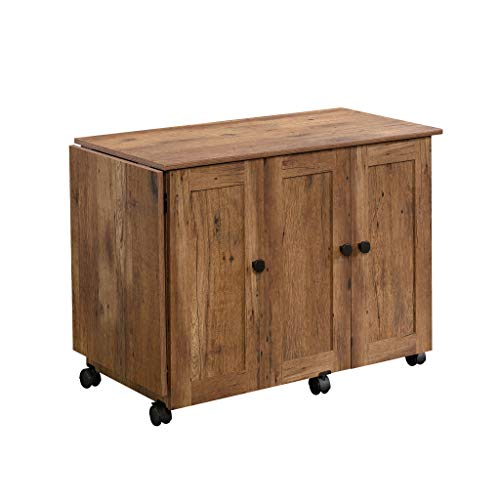
- Drop leaf adds workspace
- Hidden machine shelf and storage bins
- Easy-roll casters and five-year parts warranty
Best For: Crafters wanting mobile, concealed storage
Best Full-Size Lift
Harriet Hydraulic Sewing Cabinet

- Three-position hydraulic machine lift
- Fits machines up to 55 pounds
- Four drawers and locking casters
Best For: Sewists needing a spacious, versatile workstation
Best Compact Organizer
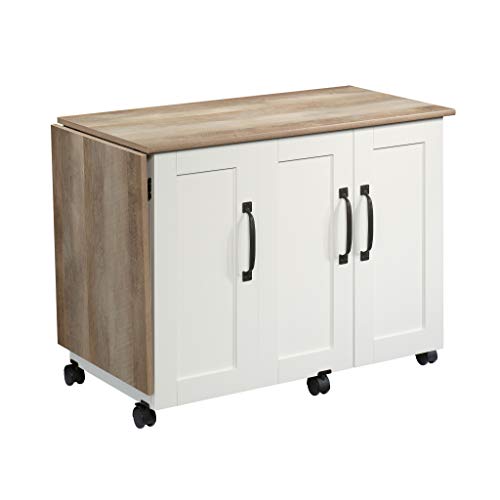
- Drop leaf expands the work surface
- Hidden shelf, bins, and adjustable storage
- Rolling design with 75-pound capacity
Best For: Home crafters needing flexible everyday storage
Best for Quilting
Christa Expandable Sewing Cabinet

- Side and rear leaves support large projects
- Two-position manual machine lift
- Locking casters and 10-year warranty
Best For: Quilters needing an expansive supported work surface
Best for Organized Craft Rooms

- Fold-out worktable for sewing and crafts
- Six adjustable shelves plus enclosed compartments
- Built-in six-outlet power strip
Best For: Crafters who need concealed, customizable storage
Best for Flexible Small-Space Sewing

- Folds into a compact side cabinet
- Five wheels with two locking casters
- Trays, shelves, and 20 wooden pegs
Best For: Sewists needing a movable, space-conscious station
Best for Heavy-Duty Multi-Use Workspaces

- 60-inch surface with foldable side shelf
- 305-pound capacity steel frame
- Three drawers and adjustable machine platform
Best For: Sewists needing a wide, sturdy multipurpose desk
Most Organized
46.5-Inch Pegboard Sewing Table
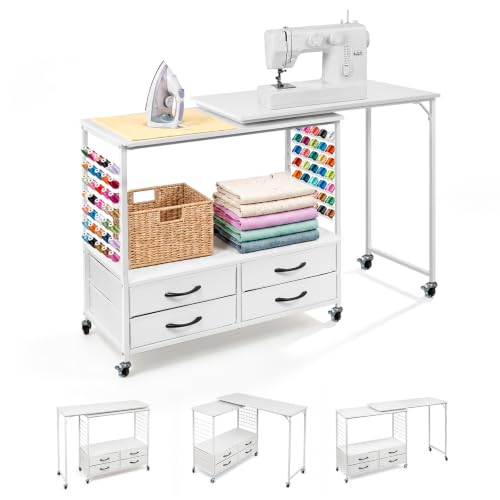
- Holds up to 70 mini spools
- Four drawers plus a two-tier shelf
- Foldable panel and lockable casters
Best For: Sewists needing extensive thread and accessory storage
Best Tech Features
Lighted Folding Sewing Cabinet

- Motion-sensor, three-color LED lighting
- Charging station with AC, USB, and Type-C ports
- Three trays, shelf, and six wheels
Best For: Crafters wanting built-in lighting and charging
Best Compact Value
Multipurpose Folding Craft Station

- Folds into a compact side table
- Pegs, trays, and interior shelf for storage
- Lockable casters and magnetic doors
Best For: Small spaces needing a mobile multipurpose station
Best Value Storage – Vintage Oak Sewing Cart
Sauder Miscellaneous Storage Sewing/Craft Cart/ Pantry cabinets, Vintage Oak finish
Check Price On AmazonIf you want sewing machine cabinets with a traditional furniture look and useful concealed storage, this Sauder cart is a practical option. Its drop leaf expands the work surface, while the roll-open door hides a machine shelf, bins, and adjustable storage.
Best For: Crafters who need a mobile sewing station with organized storage in a vintage-style finish.
Pros:
- Drop leaf provides additional sewing or craft workspace.
- Includes two storage bins, a hidden sewing-machine shelf, and two adjustable shelves.
- Easy-roll casters make the cart easier to reposition.
- Backed by a five-year parts warranty.
Cons:
- Engineered-wood construction requires assembly.
- The supplied notes do not specify a hydraulic or manual machine lift.
With three shelves, multiple compartments, and a compact rolling design, this cabinet balances everyday organization with flexible placement. Choose it if concealed storage matters more than an integrated lift system.
Best Full-Size Lift – Harriet Hydraulic Sewing Cabinet
Among sewing machine cabinets, the Arrow Harriet stands out for its three-position hydraulic lift and full-size work area. The lift switches between free-arm, flat-bed, and storage positions, while drawers and a large cubby keep sewing supplies close at hand.
Best For: Sewists who want a full-size cabinet with a hydraulic lift, expandable leaves, and substantial accessory storage.
Pros:
- Three-position hydraulic lift supports free-arm, flat-bed, and storage configurations.
- Large opening fits most standard sewing machines up to 55 pounds.
- Four drawers, four embroidery-hoop hooks, and a large interior cubby provide storage.
- Heavy-duty locking casters and a 10-year limited warranty add practical reassurance.
Cons:
- Its full-size 82.68-inch width requires considerable room.
- Custom acrylic inserts are compatible but are not stated as included.
The Harriet is the strongest choice here for users prioritizing lift versatility and a broad sewing surface. Confirm your available floor space and machine weight before purchase.
Best Compact Organizer – Soft White Sewing Cart
This Sauder model is one of the more approachable sewing machine cabinets for a craft room, living room, or home office. It combines a drop-leaf tabletop with a hidden machine shelf, adjustable shelving, storage bins, and rolling casters in a light Soft White and Lintel Oak finish.
Best For: Home crafters who want a compact, movable sewing and craft table with everyday storage.
Pros:
- Drop-leaf design expands the workspace when needed.
- Two bins, a hidden shelf, and adjustable shelving organize supplies.
- 75-pound maximum weight capacity suits many standard setups.
- Includes easy-roll casters and a five-year limited parts warranty.
Cons:
- Assembly is required.
- The supplied notes do not indicate an integrated machine lift.
- Storage is more limited than the full-size Harriet cabinet.
Its 19.5-inch depth and freestanding rolling format make it useful where flexibility is important. It is a sensible pick for general sewing and crafting rather than large, permanently installed machines.
Best for Quilting – Christa Expandable Sewing Cabinet
For quilting and other large projects, the Arrow Christa offers sewing machine cabinets with an expansive work area. Its rear and side leaves help support fabric, while the manual lift, top drawer, and included cover provide useful flexibility when the machine is in use or storage.
Best For: Quilters and sewists who need extended support for large projects and a machine lift for free-arm or flat-bed sewing.
Pros:
- Side and rear leaves expand the workspace for large projects.
- Two-position manual lift accommodates free-arm and flat-bed positions.
- Large opening fits most standard machines up to 45 pounds.
- Locking heavy-duty casters and a 10-year warranty support long-term use.
Cons:
- Manual lift requires more hands-on adjustment than a hydraulic system.
- Machine capacity is limited to 45 pounds.
- Assembly is required.
The Christa is particularly compelling when keeping quilts and other oversized work off the floor is a priority. Its single drawer and shelf are less storage-focused than some cabinets, but the broad expandable surface is the key advantage.
Best for Organized Craft Rooms – Sauder Craft & Sewing Armoire
For shoppers seeking sewing machine cabinets that conceal supplies while adding a dedicated workspace, the Sauder Craft & Sewing Armoire combines a fold-out table with extensive interior storage. Its freestanding, Glacier White design fits craft rooms, home offices, and living rooms.
Best For: Crafters who want enclosed storage, adjustable shelving, and an integrated workspace.
Pros:
- Fold-out table creates room for sewing, crafting, or family activities.
- Six adjustable shelves help customize storage for supplies and equipment.
- Built-in six-outlet power strip provides convenient access to power.
- Two doors and multiple compartments help keep materials organized and out of sight.
Cons:
- Assembly is required.
- The 50-pound maximum weight capacity may limit heavier equipment and supplies.
- Its tall armoire format requires more vertical space than a standard sewing desk.
The Sauder is a strong choice when storage organization and a concealed sewing area matter more than a compact tabletop footprint. Its five-year parts warranty is an added benefit for long-term use.
Best for Flexible Small-Space Sewing – VEVOR Folding Sewing Table
This VEVOR folding sewing table is a practical option among sewing machine cabinets for spaces that need a workstation that can be tucked away. It folds into a compact side cabinet, rolls on five swivel wheels, and provides divided storage for sewing materials.
Best For: Sewists who want a movable, foldable station with dedicated storage trays, shelves, and pegs.
Pros:
- Folding design changes from a sewing station to a compact cabinet.
- Five swivel wheels, including two locking casters, make repositioning and stabilizing easier.
- Includes two detachable trays, two shelves, and 20 wooden pegs for supplies.
- Water- and oil-resistant board surfaces are easy to wipe clean.
Cons:
- The 41.2-pound table has an overall weight capacity of 88 pounds, which may not suit very heavy setups.
- Its 15.7-inch depth provides a relatively narrow workstation.
- Assembly is required.
The VEVOR stands out for flexibility: fold it when space is limited, move it when your layout changes, or use it as a desk or display cabinet. It is best suited to lighter, organized sewing setups rather than oversized machines or large fabric inventories.
Best for Heavy-Duty Multi-Use Workspaces – Magshion 60-Inch Sewing Table
For shoppers comparing sewing machine cabinets with larger work surfaces, the Magshion 60-inch sewing table offers a broad desktop, foldable side shelf, adjustable machine platform, and substantial storage. Its steel frame and 305-pound capacity also make it suitable for craft, office, and computer tasks.
Best For: Sewists who need a wide, stable work surface that can support sewing, crafting, or computer work.
Pros:
- 60-inch-wide tabletop and 9.5-inch foldable side shelf expand the work area.
- Three drawers and a lower open shelf organize tools, fabric, and supplies.
- Adjustable platform offers six height positions for sewing machines, laptops, or keyboards.
- Heavy-gauge steel frame supports up to 305 pounds and includes floor levelers.
Cons:
- At 60 inches wide, it requires substantial floor space.
- The storage configuration is more open and desk-like than a fully enclosed armoire.
- The drawers use a glide mechanism listed as having no roller glide.
The Magshion is the strongest fit for users who prioritize stability, capacity, and a generous sewing surface. Its modern black-and-white design also makes it practical as a multipurpose workstation outside the craft room.
Most Organized – 46.5-Inch Pegboard Sewing Table
For shoppers comparing sewing machine cabinets, this folding table stands out for its unusually generous thread and accessory storage. Two peg rows accommodate up to 70 mini spools, while four drawers, a two-tier shelf, and a broad work surface keep sewing supplies close at hand.
Best For: Sewists who prioritize organized thread storage and a flexible workspace.
Pros:
- Two peg rows hold up to 70 mini spools.
- Four drawers and a two-tier shelf provide additional storage.
- Rotating foldable panel expands or reduces the workspace.
- Six casters support mobility, with four lockable wheels for stability.
Cons:
- The open dimensions are relatively narrow at 13.8 inches deep.
- Assembly is required, even though the parts are pre-drilled.
This is a practical choice for a dedicated sewing area that also needs to serve as a compact desk. Its storage capacity is the main advantage, while the foldable design helps it fit more easily into multipurpose rooms.
Best Tech Features – Lighted Folding Sewing Cabinet
Among sewing machine cabinets, this folding model adds convenience-focused features that can simplify a crafting setup. It includes adjustable three-color LED lighting with motion sensing, a built-in charging station, three storage trays, and a shelf, along with a fold-out work surface.
Best For: Crafters who want integrated lighting and power access in a mobile sewing station.
Pros:
- Power strip includes two AC outlets, one USB port, and one Type-C port.
- Motion-sensor LEDs offer white, warm, and blue lighting options.
- Three trays and one shelf organize sewing tools and thread.
- Six wheels and a foldable design support repositioning and compact storage.
Cons:
- The 15.7-inch depth may limit workspace for larger projects.
- Assembly is required.
The integrated lighting and charging station make this a particularly convenient option for sewing spaces where outlets or task lighting are limited. It also transitions into a compact side table or nightstand when folded.
Best Compact Value – Multipurpose Folding Craft Station
This compact option is worth considering when shopping for sewing machine cabinets that can double as general-purpose furniture. Its folding design provides a 46-inch open work area, while pegs, trays, an interior shelf, and magnetic doors help keep supplies contained when the table is closed.
Best For: Small-space sewists who need a mobile station that converts into a side table.
Pros:
- Two peg rows, two storage trays, and an interior shelf organize supplies.
- Folds into a compact 23-inch-wide side table.
- Lockable casters improve stability during use.
- Magnetic door locks help keep stored items contained while moving it.
Cons:
- Engineered-wood construction requires assembly.
- The included warranty is limited to 60 days and has return conditions.
- Storage is less extensive than models with multiple drawers.
Its main appeal is versatility: use it for sewing, other crafts, or desk work, then close it up when the project is finished. The compact footprint and mobility make it a sensible fit for rooms that serve several purposes.
How We Picked These Sewing Machine Cabinets
We focused on the features that have the greatest effect on everyday sewing: machine compatibility, workspace stability, storage capacity, mobility, setup flexibility, and overall footprint. The selection includes traditional cabinets with expandable leaves and machine lifts, compact folding tables for multipurpose rooms, and larger desks designed to keep supplies close at hand.
We also considered whether each design supports different sewing styles. Quilters and frequent sewists may benefit from a full-size cabinet with a generous work surface, while occasional users may prefer a foldable station that can be closed or rolled into storage after a project.
Quick Comparison
- Best for a traditional sewing room: Full-size Arrow cabinets with expandable leaves and dedicated machine-lift features.
- Best for compact spaces: Folding Sauder, VEVOR, Best Choice Products, and similar multipurpose tables.
- Best for vertical storage: The Sauder craft and sewing armoire.
- Best for supply organization: Models with multiple drawers, shelves, trays, peg storage, or open compartments.
- Best for moving between rooms: Cabinets with locking wheels and a folding or compact profile.
Key Buying Factors for Sewing Machine Cabinets
Machine Fit and Lift Design
Measure your sewing machine’s width, depth, height, and free-arm clearance before ordering. A hydraulic or manual lift can make switching between free-arm and flatbed sewing easier, but confirm that the cabinet’s opening and lift platform support your machine. Heavy machines also require a sturdy surface and properly rated hardware.
Workspace and Expandable Leaves
A compact top may be adequate for hemming or repairs, while quilting and larger projects benefit from side or rear leaves. Check both the closed and expanded dimensions so the cabinet will work in your room without blocking walkways, doors, or drawers.
Storage and Organization
Drawers are useful for small notions, shelves hold cases and fabric, and peg systems keep frequently used tools visible. Open storage is convenient but may collect dust, whereas an armoire or enclosed cabinet provides a tidier appearance. Choose storage that matches the supplies you actually use.
Mobility, Stability, and Construction
Locking casters make repositioning easier, but the locks should engage securely before sewing. Folding designs save space but may have less mass than full-size furniture. Look for a well-supported top, smooth hardware, level casters, and a finish that suits the room. Always follow the manufacturer’s assembly and weight-limit instructions.
Who Should Buy Which Sewing Machine Cabinets?
Choose a full-size Arrow cabinet if you sew frequently, want a dedicated workstation, or need an expandable surface and integrated machine lift. These models are especially appealing for quilting and longer sessions.
Choose a folding Sauder, VEVOR, Best Choice Products, or similar table if your sewing area doubles as an office, guest room, or craft space. Their compact designs are easier to close, move, and store, though you should verify stability and machine fit.
Choose a vertical sewing armoire if floor space is limited but you need enclosed storage. It can keep supplies visually contained while using height instead of a wide footprint.
Choose a larger storage-focused desk if drawers, shelves, charging features, or peg storage matter more than a concealed machine lift. Before buying, compare the assembled dimensions and leave enough clearance to sit comfortably and operate the machine.