The best laser engravers for home workshops balance cutting power, workspace, safety, software, and noise without overwhelming your available space. The right machine can handle personalized gifts, signs, décor, prototypes, and small-business production.
These 10 options span enclosed and open-frame designs, diode and dual-laser systems, compact hobby machines, and faster models built for repeat work. Use the guide below to narrow the choices by materials, workflow, budget, and workshop setup.
Best 10 Laser Engravers for Home Workshops Picks for 2026
Powerhouse Pick

- 40W laser with a large 23.93-by-15.16-inch bed
- Up to 600mm/s engraving and AutoPassthrough support
- Enclosed Class 1 design with auto-focus and rotary bundle
Best For: Large workshop projects and higher-volume engraving
Budget Workshop Choice

- 10W diode laser with a 300-by-300mm work area
- Supports LightBurn, LaserGRBL, mobile, web, and TF-card use
- Includes air assist, TF card, card reader, and assembly tools
Best For: Small DIY projects and varied software workflows
Easy Enclosed Pick

- Ready-to-use enclosure with pre-calibrated smart camera
- Up to 600mm/s speed with CoreXY motion
- Class 1 safety features and broad software compatibility
Best For: Beginners wanting camera-assisted, enclosed engraving
Portable Dual-Laser Pick
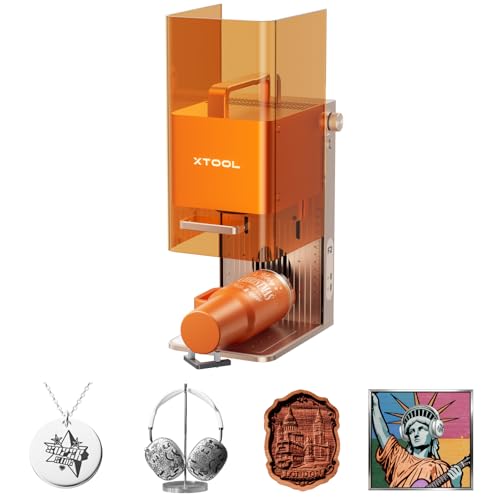
- Combines 15W diode and 5W infrared lasers
- 50MP camera supports precise small-item alignment
- Compact, enclosed design weighs about 10 pounds
Best For: Portable personalization and color metal marking
Best Enclosed Pick

- Enclosed Class 1 design with multiple safety features
- 600 mm/s speed, camera preview, and autofocus
- Optional IR module expands detailed metal and plastic engraving
Best For: Home creators wanting a guided, enclosed machine for wood, acrylic, and detailed projects
Best Open-Frame Value

- 10W laser with a 390 × 410 mm work area
- Modular metal frame supports maintenance and upgrades
- Compatible with LightBurn and LaserGRBL
Best For: DIY users seeking modular hardware and broad software compatibility
Best Precision Workhorse

- 400 × 415 mm workspace for larger projects
- 10,000 mm/min speed and 0.06 mm spot precision
- Supports 200+ materials, LightBurn, LaserGRBL, and SD-card operation
Best For: Makers needing a spacious, versatile machine for mixed-material projects
Best Beginner-Friendly Upgrade Path

- Near-A4 workspace with compact footprint
- Free app-based control and offline engraving
- Optional IR head supports future metal projects
Best For: Beginners, gift makers, and small-batch craft businesses
Best for Large, Fast Projects
20W 300×300mm Enclosed Laser Cutter

- Large 300-by-300mm working area
- Up to 20,000 mm/min engraving speed
- Enclosed Class 1 design with multiple safety protections
Best For: Larger designs, batch production, and small-business customization
Powerhouse Pick – xTool S1 40W Rotary Bundle
For home workshops tackling substantial projects, the xTool S1 is a high-output option among laser engravers for home workshops. Its 40W laser, 600mm/s speed, large 23.93-by-15.16-inch bed, and included rotary bundle suit both larger flat pieces and curved items.
Best For: Large projects, higher-volume engraving, and users who want an enclosed, guided setup.
Pros:
- 40W power can cut up to 18mm cherry wood in a single pass, according to the supplied specifications.
- Large work area, AutoPassthrough support, and rotary functionality expand project options.
- Auto-focus, material presets, tutorials, and Class 1 enclosed safety features simplify operation.
Cons:
- At 86.8 pounds, it is substantially less portable than compact desktop models.
- Its larger capability and rotary bundle may be more machine than casual users need.
The S1 stands out when productivity, material capacity, and enclosed operation matter more than portability. It is a strong fit for a dedicated workshop with room for a full-size machine.
Budget Workshop Choice – Twotrees TTS-10 Pro 10W
The Twotrees TTS-10 Pro is a practical entry point for laser engravers for home workshops, offering a 10W diode laser and a 300-by-300mm work area. It is aimed at smaller projects such as coasters, jewelry, keychains, phone cases, and compact signs.
Best For: DIY users and small workshops engraving wood, bamboo, leather, acrylic, dark glass, and coated or anodized metal.
Pros:
- 10W optical power supports deep engraving on several common craft materials.
- 32-bit dual-core control board supports computer, mobile, web, and TF-card workflows.
- Includes assembly tools, a TF card, card reader, and air-assist pump with tubing.
Cons:
- The approximately 11.8-by-11.8-inch work area limits larger projects.
- Bare stainless steel and other uncoated metals are not recommended without surface preparation or marking spray.
- Unlike enclosed models, the supplied notes do not describe a fully enclosed safety cover.
Choose the TTS-10 Pro if you want flexible software support and useful included accessories without needing a large bed. Confirm your material list and project dimensions before buying.
Easy Enclosed Pick – Creality Falcon A1 10W
The Creality Falcon A1 is designed for straightforward use in home workshops, combining a ready-to-use enclosed design with smart camera positioning and 600mm/s motion. Its pre-set parameters and proprietary software reduce setup friction for common engraving projects.
Best For: Beginners and home users who prioritize camera-assisted alignment, enclosure, and simple project setup.
Pros:
- Pre-calibrated HD camera provides a full-frame view for positioning workpieces.
- CoreXY motion and dual motors enable speeds up to 600mm/s.
- Class 1 enclosure includes dual doors, smoke control, auto-lock, emergency stop, and radiation filtering.
Cons:
- The actual working area is 381 by 305mm and is not compatible with a 500-by-500mm honeycomb panel.
- The 10W model does not support cutting acrylic, and acrylic requires a coated surface for engraving.
- Highly reflective materials, including mirror-finished metals and mirrored acrylic, are prohibited.
The Falcon A1 is appealing when alignment convenience and enclosed operation are priorities. Its material restrictions are important, so review them carefully if your projects involve acrylic or reflective metals.
Portable Dual-Laser Pick – xTool F2 5W IR and 15W Diode
The xTool F2 takes a different approach to laser engravers for home workshops by pairing a 15W diode laser with a 5W infrared laser. Its compact, fully enclosed design, 50MP camera, and extremely high stated speed make it suited to detailed personalization and small-batch work.
Best For: Small items, color marking on metal, mobile customization, and users who need dual-laser material flexibility.
Pros:
- Dual lasers support 300-plus materials, including metal color marking and diode-based cutting or embossing tasks.
- 50MP camera offers up to 0.1mm alignment accuracy on small pieces.
- Fully enclosed, leak-proof body, built-in fan, optional purifier, and approximately 10-pound weight support indoor or mobile use.
Cons:
- The supplied dimensions and slide-extension description indicate a compact desktop format rather than a large-bed machine.
- It is a Class 4 laser, so its safety requirements differ from the Class 1 enclosed models listed here.
- Some expanded capabilities require accessories such as the RA3 or Slide Extension.
The F2 is the most specialized and portable option in this group. It makes particular sense for precise small-item personalization and metal marking, provided you are prepared to follow Class 4 laser safety requirements.
Best Enclosed Pick – Creality Falcon A1 Pro 20W
For home workshops where safety, convenience, and repeatable results matter, the Creality Falcon A1 Pro 20W is a strong choice among laser engravers for home workshops. Its enclosed design, camera-assisted positioning, autofocus, touchscreen, and app control make it especially approachable for frequent projects.
Best For: Home creators who want an enclosed, largely pre-assembled machine for wood, acrylic, and detailed engraving work.
Pros:
- Enclosed Class 1 design with light filtering, smoke removal, emergency stop, and lid-open shutoff features.
- Up to 600 mm/s engraving speed for efficient batch work.
- HD camera preview, AI vision, red-dot ranging, and three-second autofocus support accurate placement.
- Touchscreen, app control, and approximately 80% pre-assembly simplify operation.
Cons:
- The optional 2W infrared module for high-precision metal and plastic engraving is sold separately.
- It is compatible only with 460 × 346 mm honeycomb panels.
- The machine is relatively large and weighs 37.4 pounds.
The A1 Pro stands out when you want a more contained and guided workflow rather than an open-frame setup. Its 20W blue laser supports cutting up to 10 mm basswood and 8 mm black acrylic, while the optional IR module expands its fine-detail capabilities.
Best Open-Frame Value – ORTUR Laser Master 2 S2 10W
The ORTUR Laser Master 2 S2 LU2-10A offers a modular, open-frame approach for hobbyists who want broad software compatibility and hands-on control. It is a practical option among laser engravers for home workshops, but its Class 4 design calls for careful safety practices and the included protective eyewear.
Best For: DIY users who prioritize modular construction, a generous work area, and compatibility with LightBurn and LaserGRBL.
Pros:
- 10W optical laser power with a 390 × 410 mm engraving area.
- Modular metal construction supports assembly, maintenance, and component upgrades.
- Works with LightBurn and LaserGRBL across supported Windows and Mac setups.
- Includes safety responses for tilt, displacement, USB disconnection, and prolonged inactivity.
Cons:
- It is a Class 4 laser, so the open-frame design requires a more safety-conscious workspace.
- The supplied notes specify a 10W module rather than the higher-power options referenced in the included ground-wire note.
- Assembly is required, although setup is generally described as taking 10–15 minutes.
Choose the ORTUR if you prefer repairable, modular hardware and flexible software support over an enclosed, ready-to-run experience. Its built-in air-assist interface and stated cutting capability make it suited to more demanding DIY cutting projects.
Best Precision Workhorse – Creality Falcon 10W
The Creality Falcon 10W is designed for makers who need a sizable work area and accurate cutting without moving to a higher-power model. Its speed, claimed precision, offline operation, and material range make it a versatile contender among laser engravers for home workshops.
Best For: Home workshops handling larger wood, acrylic, leather, fabric, and mixed-material projects.
Pros:
- 400 × 415 mm workspace accommodates larger pieces in one pass.
- 10,000 mm/min maximum speed supports faster engraving and cutting.
- 0.06 × 0.06 mm compressed spot and stated repositioning accuracy support detailed work.
- Supports LightBurn, LaserGRBL, and offline projects through an SD card.
Cons:
- The supplied safety features include a UV-filtering acrylic shield and goggles, but the machine is not described as fully enclosed.
- Its listed product dimensions of 1 × 1 × 1 inches appear inconsistent with the stated workspace, so verify the physical footprint before buying.
- The 10W configuration may be less suitable for users seeking the deepest or fastest cuts.
The Falcon 10W is a sensible middle ground for projects that benefit from both precision and extra workspace. Its stated one-pass cutting capability reaches 12 mm wood and 5 mm black acrylic, while offline SD-card operation adds flexibility for workshop use.
Best Enclosed Value – VEVOR 20W Enclosed Laser Engraver
For shoppers comparing laser engravers for home workshops, this VEVOR model combines a 20W output, enclosed Class 1 design, and an 11.8-by-11.8-inch work area. Its 7,000 mm/min speed and compatibility with LightBurn, LaserGRBL, and CutLabX make it a practical option for wood, leather, paper, and suitable acrylic projects.
Best For: Home users who want an enclosed machine for wood crafts, signs, leather projects, and similar materials.
Pros:
- 20W output can cut 0.3-inch basswood in a single pass.
- Enclosure filters laser light while helping contain smoke and noise.
- 32-bit control board, fine spot size, and aluminum frame support detailed, smoother work.
- Supports multiple software options, Wi-Fi through CutLabX, and offline engraving.
Cons:
- At 7,000 mm/min, it is slower than some competing models.
- It cannot cut metal or work directly on transparent, reflective, or translucent materials.
- LaserGRBL support is limited to Windows and low-speed devices.
This is a sensible enclosed starter machine when safety features and straightforward material compatibility matter more than maximum production speed. Keep its material limitations in mind, especially if metal engraving is a priority.
Best Beginner-Friendly Upgrade Path – K15 Pro 10W Laser Engraver
Among laser engravers for home workshops, the K15 Pro emphasizes easy setup and flexible control. It offers a near-A4 work area, free CutLabX software with app and AI features, offline jobs through a TF card, and a verified 10W diode output for everyday crafting.
Best For: Beginners, gift makers, and small businesses that need a compact machine with accessible software and upgrade potential.
Pros:
- Assembles in about three minutes and includes safety glasses, materials, and tools.
- Supports app control, LightBurn, LaserGRBL, and offline engraving.
- Verified 10W output, dual-fan cooling, 15,000 mm/min speed, and one-touch focusing.
- Optional IR laser head can expand work with stainless steel tumblers and aluminum.
Cons:
- The standard 10W diode is not the included solution for bare-metal engraving.
- The 11.8-by-7.9-inch work area is smaller than some larger-format machines.
- Some capabilities require optional accessories such as the IR head, rotary roller, or air pump.
The K15 Pro is appealing if you value a gentle learning curve and future expansion. Its compact A4 workspace suits most everyday craft projects, while the optional IR head provides a possible upgrade path for more specialized work.
Best for Large, Fast Projects – 20W 300×300mm Enclosed Laser Cutter
For home workshops handling larger designs or repeated orders, this 20W laser cutter offers a 300-by-300mm work area and speeds up to 20,000 mm/min. Its enclosed Class 1 design, multiple control methods, and fine 0.01mm focus make it suited to detailed signs, ornaments, gifts, and batch work.
Best For: Makers and small businesses that need a larger work area for wood cutting, detailed engraving, and small-batch production.
Pros:
- Large 300-by-300mm workspace accommodates bigger designs or multiple pieces.
- 20W power and up to 20,000 mm/min speed support demanding, faster projects.
- 0.01mm square focus is designed for sharp logos, text, and fine patterns.
- Enclosure includes flame detection, tilt protection, automatic shutdown, and emergency stop.
Cons:
- Its stronger production focus may be more machine than casual crafters need.
- Material performance depends on compatibility; the notes do not indicate unrestricted metal cutting.
- Although enclosed, workshop ventilation may still be important when managing fumes and dust.
This model stands out when workspace and throughput are higher priorities than a minimal footprint. It is a strong fit for custom orders and larger craft layouts, provided the intended materials are compatible with its laser system.
How We Picked the Best Laser Engravers for Home Workshops
We compared these machines by laser type and output, usable work area, cutting and engraving speed, focusing method, safety features, air-assist support, camera positioning, software controls, and material compatibility. We also considered practical workshop concerns such as enclosure design, ventilation, portability, setup difficulty, and whether the machine suits occasional crafts or repeated production.
Advertised wattage and speed are useful starting points, but they do not guarantee identical results. Lens quality, focus accuracy, material settings, passes, airflow, and firmware can affect the finished project just as much.
Quick Comparison
| Best for | Look for | Why it matters |
|---|---|---|
| General DIY use | 10W–20W diode laser | Good balance of detail, cutting ability, and cost |
| Thicker wood and faster work | 20W–40W diode laser with air assist | Reduces passes and helps manage smoke and flare-ups |
| Metal marking and fine detail | IR or dual-laser system | Expands material options beyond standard diode engraving |
| Small workshops and homes | Full enclosure and exhaust provision | Improves protection and makes ventilation easier to manage |
| Signs and larger projects | Large work area and pass-through design | Reduces repositioning and supports oversized materials |
Key Buying Factors for Laser Engravers for Home Workshops
Laser Power and Material Range
Choose power based on your usual materials, not maximum specifications. Lower-power diode models are suitable for engraving wood, leather, cardboard, and coated surfaces. Higher-power machines are better for cutting thicker plywood and completing jobs more quickly. If you expect to mark stainless steel, anodized aluminum, or other metals, check whether an IR laser or a compatible coating is required.
Work Area, Accuracy, and Speed
Measure your projects before choosing a bed size. A compact machine may be easier to place, while a 300×300mm or larger work area is more convenient for signs and batches. High speed is valuable for production, but only when paired with reliable motion control, accurate focusing, and suitable acceleration settings.
Safety and Ventilation
For indoor use, an enclosed machine is often the more practical choice, especially around children, pets, or shared living areas. Every laser can produce smoke and potentially hazardous fumes, so plan for proper exhaust, filtration, fire awareness, and supervision. Never engrave unknown plastics or materials that can release dangerous gases.
Ease of Use and Workflow
Camera alignment, autofocus, touch controls, offline operation, and established software support can save substantial setup time. Beginners may benefit more from dependable positioning and clear safety controls than from the highest headline speed.
Who Should Buy Which Laser Engravers for Home Workshops?
Choose a compact 10W diode machine if you are learning laser engraving, making occasional gifts, or working with smaller pieces. A 20W model is a stronger all-purpose choice for frequent wood cutting, craft production, and small-business work. Select a 40W-class machine when thicker materials, larger batches, and fewer passes justify the added cost and space.
Buy an enclosed model when safety, smoke management, and a cleaner home-workshop setup are priorities. Choose a dual-laser system if metal marking or specialized materials are central to your projects. Before ordering, confirm included accessories, warranty coverage, replacement lens and belt availability, software compatibility, and the seller’s support policy.