The best drafting tables for shared workspaces need to support more than drawing. They should accommodate different users, fit changing floor plans, and offer enough stability for drafting, crafting, painting, or technical work.
This roundup compares 10 adjustable drafting tables across a range of formats, including tilting glass and wood surfaces, integrated storage, stools, wheels, and compact footprints. Use the guide below to match the right table to your team’s workflow and available space.
Best 10 Drafting Tables for Shared Workspaces Picks for 2026
Flexible Classic
Adjustable Birch Drafting Table
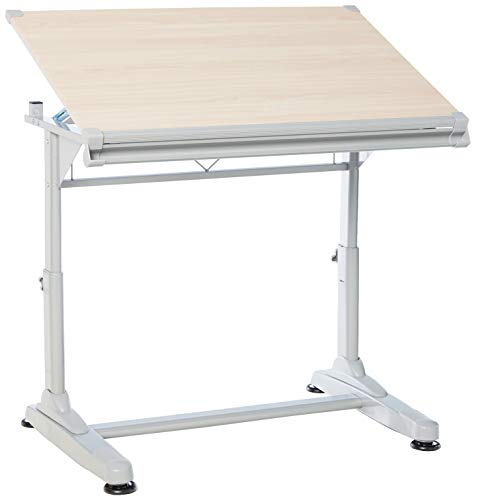
- 11 tilt settings up to 45 degrees
- Manual height adjustment from 26.5 to 38.5 inches
- Pencil tray, rubber feet, and BIFMA certification
Best For: Shared studios needing a sturdy traditional drafting surface
Collaborative Choice
Electric Whiteboard Drafting Desk

- Electric height range of about 28.3 to 45.6 inches
- Dry-erase top tilts from 0 to 90 degrees
- Lockable casters, presets, and safety features
Best For: Mobile shared spaces used for drafting, teaching, and brainstorming
Natural Workhorse
Adjustable Wood Drafting Table
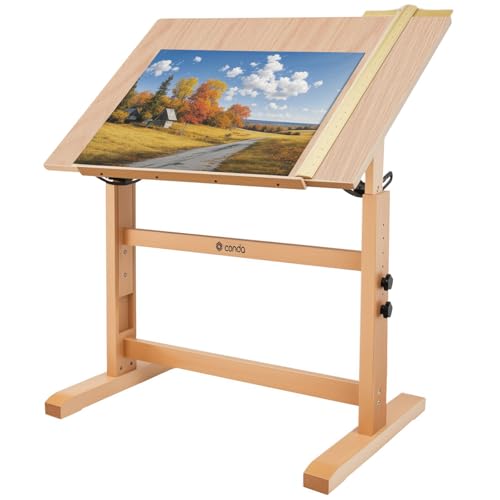
- Wood surface measures about 35.4 by 23.6 inches
- 0-to-45-degree tilt and 31.5-to-37-inch height range
- Built-in pencil ledge and ruler
Best For: Compact shared studios favoring a traditional wood work surface
Light-Table Option
Glass Drafting Desk With Stool

- Tempered glass top tilts 0 to 40 degrees
- Includes stool, side surface, and two mesh drawers
- Easy-clean surface can support tracing work
Best For: Art and craft spaces needing seating, storage, and a glass worktop
Storage-Packed Pick
Adjustable Cabinet Drafting Table

- 0–80° adjustable tabletop
- Three drawers, shelves, and cabinet
- Stable engineered-wood construction
Best For: Shared craft rooms and multipurpose offices needing built-in storage
Height-Adjustable Choice
Garvee Glass Drafting Table with Stool
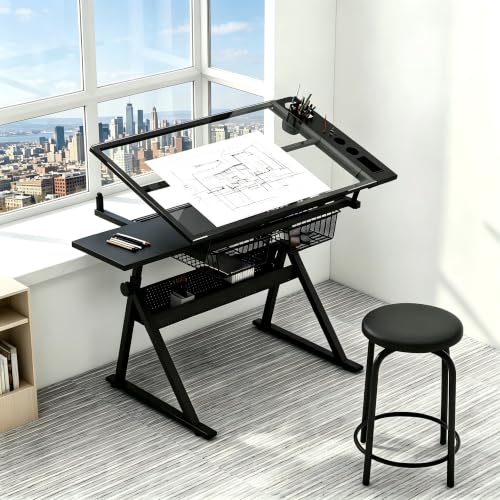
- 31.5–49.5-inch height range
- 0–75° tilting tabletop
- Includes stool and storage
Best For: Shared studios needing flexible seated or elevated work
Mobile Glass Pick
Yaheetech Adjustable Art Drafting Desk

- 0–60° adjustable glass top
- Flat feet or locking casters
- Four trays and two fabric drawers
Best For: Shared art rooms needing mobile, organized workstations
Best Adjustable Workhorse
VEVOR Adjustable Drafting Table

- 0°–90° tilt range for varied tasks
- Large A1-compatible MDF work surface
- H-frame supports up to 88 pounds
Best For: Shared drawing, writing, crafting, and meeting areas
Best for Built-In Organization
Glass Drafting Table with Drawers

- 0°–75° tilting tempered-glass top
- Six adjustable height settings
- Drawers, trays, and pencil ledge organize supplies
Best For: Shared creative spaces needing accessible storage
Best Mobile Shared Station
JupiterForce Rolling Drafting Table

- Four swivel casters, including two lockable
- 31.5–49.5-inch height range
- Two drawers plus four removable trays
Best For: Mobile studios and shared creative work areas
Flexible Classic – Adjustable Birch Drafting Table
For shared workspaces that need a dependable, traditional drawing surface, this adjustable drafting table offers a practical combination of height and angle control. Its 40-by-26-inch birch-finish top can be raised or lowered manually and tilted through 11 settings up to 45 degrees.
Best For: Artists, designers, and shared studios needing a sturdy, manually adjustable drafting station.
Pros:
- Height adjusts from 26.5 to 38.5 inches in 2-inch increments.
- Eleven desktop positions range from flat to a 45-degree angle.
- Includes a full-length pencil tray and oversized rubber feet for stability.
- BIFMA certified and backed by a limited lifetime warranty against defects.
Cons:
- Manual adjustment is less convenient than an electric height system.
- The 50-pound maximum capacity may limit heavier equipment setups.
This is a focused choice for shared workspaces where drawing comfort and straightforward durability matter more than mobility or advanced storage. Assembly is required, but the design is supported by a stated safety certification and limited lifetime warranty.
Collaborative Choice – Electric Whiteboard Drafting Desk
This 3-in-1 workstation is a versatile option for drafting tables for shared workspaces, combining an electric sit-stand base, dry-erase surface, and highly adjustable desktop. It rolls on four lockable casters and offers programmable height presets for quick transitions between users or tasks.
Best For: Classrooms, studios, offices, and collaborative spaces that need mobility, whiteboard functionality, and electric adjustment.
Pros:
- Electric height adjustment spans approximately 28.3 to 45.6 inches.
- Desktop tilts from flat to 90 degrees for drafting, reading, or teaching.
- Four lockable wheels support flexible placement while working.
- Includes three height presets, anti-collision technology, a child lock, and a storage bag.
Cons:
- The whiteboard surface requires care with strong acids, alkalis, abrasives, and alcohol-based cleaners.
- The 35.4-by-23.6-inch surface is more compact than some traditional drafting tables.
Among these drafting tables for shared workspaces, this model stands out for multi-user flexibility and collaborative planning. Its 90-degree tilt and writable surface make it especially useful when the desk must serve as both a creative station and teaching or brainstorming tool.
Natural Workhorse – Adjustable Wood Drafting Table
For teams that prefer a warm, traditional surface, this natural-wood table offers a straightforward drafting setup with manual height and angle adjustment. The 35.4-by-23.6-inch tabletop includes a built-in pencil ledge and ruler for keeping common tools close at hand.
Best For: Students, professionals, and hobbyists who want a compact wood table for drawing, construction plans, and graphic design.
Pros:
- Natural wood tabletop provides a classic creative-work surface.
- Height adjusts from 31.5 to 37 inches and the top tilts from 0 to 45 degrees.
- Built-in pencil ledge and ruler support organized, precise work.
- Includes tools, clear instructions, and pre-sorted parts for assembly.
Cons:
- Manual adjustment offers less convenience than electric models.
- No manufacturer warranty is listed in the supplied details.
- The tabletop is smaller than the largest option in this roundup.
This table is a sensible fit for shared workspaces seeking a simple, wood-based drafting station without electrical components. Its useful built-in accessories and moderate adjustment range support everyday creative work, while the listed dimensions suit more compact layouts.
Light-Table Option – Glass Drafting Desk With Stool
This glass drafting table adds a supplied stool, side countertop, and two mesh drawers to a shared workspace setup. Its tempered glass top tilts from 0 to 40 degrees, providing a smooth, easy-to-clean surface that can also function as a light table for drawing and tracing.
Best For: Art rooms and craft-focused shared workspaces that need glass, storage, and included seating.
Pros:
- Tempered glass tabletop supports drawing, tracing, writing, and computer use.
- Top tilts from 0 to 40 degrees and locks in five height positions.
- Includes a foam-padded PU leather stool and two mesh utility drawers.
- Glass and powder-coated metal surfaces can be cleaned with a damp cloth and mild cleanser.
Cons:
- Assembly is recommended for two people.
- The glass tabletop has an 88-pound maximum capacity, while the side tabletop holds 20 pounds.
- Its included stool may not suit every user or shared-workspace seating preference.
With its transparent top, integrated storage, and included stool, this is one of the more complete setups for art-oriented shared workspaces. It is less focused on sit-stand flexibility than the electric option, but it offers useful tracing capability and easy-clean materials.
Storage-Packed Pick – Adjustable Cabinet Drafting Table
For shared workspaces that need to support both everyday office tasks and creative projects, this drafting table for shared workspaces combines a 0–80° adjustable tabletop with built-in storage. Its 47.2-inch width and cabinet, shelves, and drawers help keep supplies organized without requiring a separate storage unit.
Best For: Shared craft rooms, studios, and multipurpose offices where organized storage matters.
Pros:
- Tabletop adjusts from flat to an 80° angle for writing, drafting, or painting.
- Includes three drawers, three open shelves, and a storage cabinet.
- Engineered-wood construction is designed for a stable, wobble-free work surface.
- Converts between a work desk, craft table, computer table, and easel-style station.
Cons:
- At 82 pounds, it is less convenient to reposition than lighter tables.
- Assembly is required, and tools may not be included.
- The tabletop height is listed as 29.9 inches rather than height adjustable.
This is a strong choice when several users need accessible supplies and one surface that can switch between flat work and angled creative tasks. Its fixed height and substantial footprint are worth considering before placing it in a flexible hot-desk area.
Height-Adjustable Choice – Garvee Glass Drafting Table with Stool
This Garvee model is a flexible option for drafting tables for shared workspaces, with a tabletop that tilts from 0–75° and a height range from 31.5 to 49.5 inches. The glass surface, storage compartments, and included stool make it suitable for users who alternate between seated and elevated creative work.
Best For: Shared studios or design areas where users need adjustable working heights and a supplied seat.
Pros:
- Tabletop tilts from 0–75° and the desk height adjusts up to 49.5 inches.
- Automatic rotation supports one-handed task changes.
- Tempered glass is water-resistant and easy to wipe clean.
- Includes storage compartments, trays, hanging drawers, and a stool.
Cons:
- The glass top may require more careful handling than an engineered-wood surface.
- The listed desk width is 38.5 inches, providing less room than some wider drafting tables.
- Nonwoven drawers may be less substantial than hard-sided drawers.
Height adjustment gives this table an advantage in a shared setting, especially when different people use the same station. The glass top and included stool add convenience, while the narrower work area may matter for large-format projects.
Mobile Glass Pick – Yaheetech Adjustable Art Drafting Desk
For teams that rearrange work areas, the Yaheetech is a practical candidate among drafting tables for shared workspaces. Its tempered-glass top tilts from 0–60°, while interchangeable feet let users choose between stable flat feet and wheeled mobility, including two locking casters.
Best For: Shared art rooms that value mobility, organized tool storage, and a durable glass surface.
Pros:
- Adjustable tabletop angle supports drawing, writing, and computer work.
- Includes flat feet or wheels, with two casters featuring brakes.
- Four embedded stationery trays and two fabric drawers keep tools accessible.
- Tempered glass can be paired with a light for tracing and comic creation.
Cons:
- The maximum tilt angle is 60°, less than some competing models.
- Fabric drawers may offer less rigid storage than built-in wood drawers.
- Assembly is required.
This table balances mobility and stability well for a shared room: use the flat feet when the station should stay put, or install the wheels when layouts change. Its glass top and integrated trays are particularly useful for drawing-focused teams.
Best Adjustable Workhorse – VEVOR Adjustable Drafting Table
For shared workspaces that need flexible drafting tables for shared workspaces, this VEVOR model offers a large 23.62-by-35.43-inch surface and a broad 0°–90° tilt range. Its H-frame and adjustable feet are practical features for keeping the table stable on different floors.
Best For: Teams or households sharing a table for drawing, writing, crafting, reading, and meetings.
Pros:
- Adjusts from flat to a near-vertical 90° angle.
- Large surface accommodates A1-sized paper and includes built-in pen holders.
- H-frame supports up to 88 pounds, with individually adjustable feet for leveling.
- Can also function as a home-office, computer, or general work desk.
Cons:
- Assembly is required.
- The MDF desktop and metal frame give it a more utilitarian than premium finish.
- It does not list integrated drawers or rolling casters.
This is a straightforward choice when stability, generous working space, and a wide tilt range matter more than built-in storage or mobility.
Best for Built-In Organization – Glass Drafting Table with Drawers
This glass drafting table is a useful option for shared workspaces where several people need accessible supply storage. The 40.2-inch-wide tabletop tilts from 0° to 75°, while the included drawers, compartments, trays, and pencil ledge help keep common tools organized.
Best For: Creative teams sharing paints, pens, stationery, and other small supplies in an office, studio, or study room.
Pros:
- Six height settings from 27.2 to 35.8 inches.
- Tempered glass surface tilts from 0° to 75° and wipes clean easily.
- Multiple compartments, trays, hanging drawers, and a 15.8-inch slide-up pencil ledge provide storage.
- Four anti-vibration feet help prevent movement on uneven surfaces.
Cons:
- Glass may be less forgiving than a wood surface for heavy-duty shared use.
- Assembly is recommended for two people.
- Its nonwoven drawers may be less robust than rigid drawers.
Choose this model when keeping shared supplies within reach is a priority and a cleanable glass work surface suits your group’s workflow.
Best Mobile Shared Station – JupiterForce Rolling Drafting Table
For shared workspaces that need drafting tables for shared workspaces to move between users or rooms, the JupiterForce combines a large glass surface with four swivel casters. Its 0°–60° tilt, tall height range, two drawers, and removable supply trays make it adaptable for collaborative creative work.
Best For: Studios, home offices, or shared rooms where users need to reposition a drafting station and store supplies nearby.
Pros:
- Four 360° swivel casters make the table easy to move, with two lockable wheels.
- Height adjusts from 31.5 to 49.5 inches, and the top tilts up to 60°.
- Large 41.25-by-24-inch glass work surface is easy to clean.
- Two sliding drawers and four removable supply trays provide organized storage.
Cons:
- At 99 pounds, it is substantially heavier than the other listed options.
- Assembly requires two people.
- Its 60° maximum tilt is narrower than the 90° range of the VEVOR model.
This is the strongest fit when mobility and storage are central requirements, especially for a shared studio or flexible home-office setup.
How We Picked the Best Drafting Tables for Shared Workspaces
We focused on features that matter when multiple people use the same workstation: adjustable height, a controllable work angle, surface size, stability, storage, mobility, and ease of maintenance. We also considered whether each design suits collaborative studios, classrooms, maker spaces, offices, or multipurpose rooms.
Because shared environments often serve several types of users, versatility received more weight than highly specialized features. Tables with broad adjustment ranges, durable frames, useful accessories, or compact profiles are generally easier to integrate into changing work areas.
Quick Comparison
| Feature | What to look for | Why it matters |
|---|---|---|
| Surface | Wood, laminate, or tempered glass | Affects durability, cleaning, glare, and compatibility with tools |
| Angle range | Flat through steep tilt, ideally with secure locking | Supports writing, drafting, painting, and display work |
| Height adjustment | Multiple seated and standing positions | Helps accommodate users of different heights |
| Storage | Drawers, shelves, trays, or a separate cart | Keeps shared supplies organized between sessions |
| Mobility | Casters, manageable weight, or a compact footprint | Makes room reconfiguration easier |
Key Buying Factors for Shared Workspaces
Prioritize Stability and Safe Adjustment
A table that wobbles or shifts while tilted can frustrate users and damage work. Look for a rigid base, dependable angle locks, smooth height controls, and a safety lip or raised edge to keep tools and paper from sliding.
Match the Surface to the Workflow
Wood and laminate tops are practical for general drafting and craft work, while glass surfaces can be easy to clean and useful for light-based or paint-oriented tasks. Check the usable surface dimensions rather than relying only on the product name, especially when several supplies must remain within reach.
Plan for Storage and Cleaning
Built-in drawers and shelves can reduce clutter, but they also add weight and may limit legroom. In shared spaces, choose storage that can be labeled or assigned. Smooth, nonporous surfaces are usually simpler to sanitize between users.
Check the Footprint and Assembly Requirements
Measure the table, stool clearance, chair position, and walking paths. Confirm the adjustment mechanism, maximum load, assembly time, and whether casters lock. A table that fits the room but blocks circulation is not a practical choice.
Who Should Buy Which Drafting Tables for Shared Workspaces?
Choose a large adjustable wood-top model when users need generous room for plans, laptops, and tools. A compact 3-in-1 or tilting desk is better for classrooms, hot desks, and rooms that must change function frequently. Glass-top models suit art studios and users who value easy cleanup, provided glare and breakage concerns are acceptable.
Look for a table with drawers or shelves when supplies need to stay at the workstation. A stool-included option can simplify setup for a dedicated art station, while a wheeled design is useful for studios that regularly rearrange equipment. For mixed teams, prioritize the widest useful height and angle range over decorative styling.