The right processor can make streaming feel effortless, keeping gameplay responsive while handling encoding, chat, alerts, recording, and background apps. The best choice depends on your platform, encoder, resolution, and upgrade budget—not just the core count.
We compare 10 current and proven AMD and Intel options, from affordable six-core chips to high-end processors built for demanding gaming and content workflows. Use the guide below to match performance, compatibility, and value to the way you stream.
Best 10 Computer Processors for Streaming Picks for 2026
High-Cache Streaming Pick

- 8 cores and 16 threads
- 104 MB installed cache
- Socket AM5 platform
Best For: AM5 streaming and gaming desktops
High-Core Hybrid Choice

- 24 cores and 24 threads
- Up to 5.7 GHz unlocked
- Integrated Intel Graphics
Best For: Windows 11 Intel streaming builds
Efficient Gaming Streamer
- 8 cores and 16 threads
- 96 MB L3 cache
- Up to 5.2 GHz
Best For: AM5 gaming-focused streaming PCs
Content Creation Workhorse

- 12 cores and 24 threads
- 140 MB installed cache
- 120-watt Socket AM5 processor
Best For: Streaming and content-creation desktops
High-End Gaming Pick

- 8 cores and 16 threads
- 96 MB of L3 cache
- AM5 socket with integrated Radeon Graphics
Best For: Gaming-focused streaming and multitasking
AM4 Streaming Upgrade

- 8 cores and 16 threads
- 100 MB of cache with 3D V-Cache
- Supports DDR4-3200 and select PCIe 4.0 platforms
Best For: Gaming-focused streaming on an AM4 desktop
Efficient Modern Choice

- 6 cores and 12 threads
- 5.4 GHz Max Boost with unlocked design
- 65-watt AM5 processor supporting DDR5-5600
Best For: Efficient AM5 streaming builds
Best Integrated Graphics Pick

- 8 cores and 16 threads for multitasking
- Integrated graphics for capable gaming output
- AM5, DDR5, and cooler included
Best For: Streamers building an integrated-graphics AM5 desktop
High-Clock AM5 Value

- 6 cores and 12 threads
- 5.3 GHz listed clock speed
- AM5 platform with Radeon Graphics
Best For: Streamers wanting a fast-clocked AM5 processor
Budget AM4 Streaming Pick

- 6 cores and 12 threads
- Wraith Stealth cooler included
- Unlocked 65-watt AM4 processor
Best For: Budget AM4 streaming and gaming desktops
High-Cache Streaming Pick – AMD Ryzen 7 9850X3D
The AMD Ryzen 7 9850X3D is a strong option among computer processors for streaming if you want an 8-core, 16-thread AM5 chip with substantial installed cache. Its 4.7 GHz processor speed and 140-watt rating make it better suited to a properly equipped desktop than a compact, low-power build.
Best For: Streamers building an AM5 desktop that also prioritizes gaming performance and generous cache.
Pros:
- 8 cores and 16 concurrent threads for gaming and streaming workloads.
- 104 MB of installed cache memory.
- Uses the Socket AM5 platform.
Cons:
- 140-watt rating calls for suitable cooling and power delivery.
- Cooling solution details are not supplied.
Choose this processor when its AM5 compatibility and large cache fit your planned build. Confirm motherboard, cooling, and power-supply compatibility before purchase.
High-Core Hybrid Choice – Intel Core Ultra 9 285K
Intel Core Ultra 9 Processor 285K, 24 cores (8 P-cores + 16 E-cores) up to 5.7 GHz
Check Price On AmazonThe Intel Core Ultra 9 285K stands out among computer processors for streaming with 24 cores, integrated Intel Graphics, and a hybrid design that combines 8 P-cores with 16 E-cores. Its unlocked speed reaches up to 5.7 GHz, while compatibility with Intel 800 series chipset motherboards shapes the rest of the build.
Best For: Windows 11 streamers who want a high-core-count Intel desktop processor with integrated graphics.
Pros:
- 24 cores and 24 threads using a performance-hybrid architecture.
- Unlocked speeds up to 5.7 GHz.
- Integrated Intel Graphics and PCIe 5.0 and 4.0 support.
Cons:
- No thermal solution is included.
- Requires an Intel 800 series chipset-based motherboard.
- 125-watt rating should be considered when selecting cooling.
This is a flexible choice for a new Intel-based streaming system, especially when integrated graphics and extensive connectivity matter. Budget for a compatible cooler and motherboard.
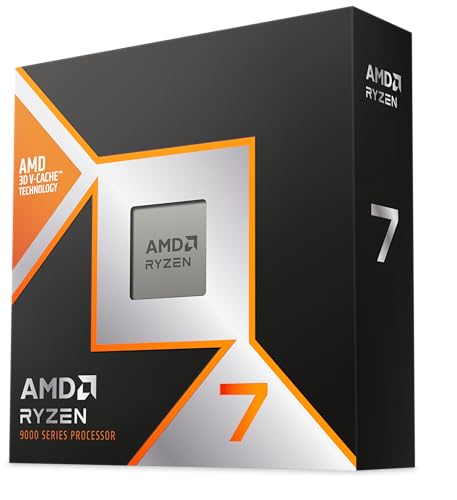
Efficient Gaming Streamer – AMD Ryzen 7 9800X3D
The AMD Ryzen 7 9800X3D is a focused option among computer processors for streaming, pairing 8 cores and 16 threads with Zen 5 technology and next-generation 3D V-Cache. It supports Socket AM5 systems and reaches speeds up to 5.2 GHz, making it a natural fit for gaming-first streaming desktops.
Best For: AM5 users who want a gaming-oriented processor with 3D V-Cache and efficient performance.
Pros:
- 8 cores and 16 threads for multitasking and streaming.
- 96 MB L3 cache and speeds up to 5.2 GHz.
- Drop-in ready for Socket AM5 infrastructure.
Cons:
- Cooler is not included.
- Its 140-watt rating requires appropriate cooling and power planning.
The 9800X3D is appealing when gaming performance is central to your stream setup and you already use, or plan to use, AM5 hardware. Add an external cooler to the build.
Content Creation Workhorse – AMD Ryzen 9 9900X3D
The AMD Ryzen 9 9900X3D is one of the more substantial computer processors for streaming in this group, offering 12 cores and 24 concurrent threads. Its 140 MB installed cache, Socket AM5 support, and 120-watt rating make it a compelling foundation for a gaming and content-creation desktop.
Best For: Streamers who want 12-core processing for content creation alongside gaming.
Pros:
- 12 cores and 24 concurrent threads.
- 140 MB of installed cache memory.
- Supports the Socket AM5 platform with a 120-watt rating.
Cons:
- Cooling solution details are not provided.
- Processor speed is listed at 4.4 GHz, lower than some alternatives here.
- Processor series information is not specified.
Consider this chip if your streaming setup also includes video editing or other multithreaded content-creation tasks. Verify the AM5 motherboard and cooling setup before ordering.
High-End Gaming Pick – Ryzen 7 7800X3D
For shoppers comparing computer processors for streaming, the AMD Ryzen 7 7800X3D offers 8 cores and 16 threads for handling demanding games and multitasking. Its 4.2 GHz clock speed, 96 MB of L3 cache, and AM5 socket make it a strong option for a modern desktop build.
Best For: Streamers who prioritize gaming performance and responsive multitasking on an AM5 platform.
Pros:
- 8 cores and 16 threads support reliable multitasking.
- 96 MB of L3 cache can improve access to frequently used data.
- AM5 socket and 5 nm process technology suit a current desktop platform.
- Integrated AMD Radeon Graphics controller provides graphics output.
Cons:
- 120-watt rating may require careful cooling and power planning.
- Maximum operating temperature is listed as 89°C.
Choose this processor when you want a high-core-count option with substantial cache for gaming-focused streaming and everyday productivity. Confirm AM5 motherboard compatibility before buying.
AM4 Streaming Upgrade – Ryzen 7 5800X3D
AMD Ryzen 7 5800X3D 8-core, 16-Thread Desktop Processor with AMD 3D V-Cache Technology
Check Price On AmazonThe AMD Ryzen 7 5800X3D is a practical choice among computer processors for streaming when you are upgrading an existing AM4 desktop. It combines 8 cores, 16 threads, a 4.5 GHz Max Boost clock, and 100 MB of cache, while supporting DDR4-3200 memory.
Best For: Streamers with compatible AM4 systems who want a gaming-oriented processor without moving to AM5.
Pros:
- 8 cores and 16 threads support gaming and streaming workloads.
- AMD 3D V-Cache technology and 100 MB of cache are suited to gaming performance.
- 4.5 GHz Max Boost provides a high advertised peak clock speed.
- Supports PCIe 4.0 on X570 and B550 motherboards.
Cons:
- Cooler is not included.
- A high-performance cooler is recommended.
- Compatibility is focused on the Socket AM4 platform.
This processor makes the most sense for a capable AM4 build, particularly one using an X570 or B550 motherboard. Budget for a suitable cooler and verify your board’s compatibility before upgrading.
Efficient Modern Choice – Ryzen 5 9600X
For buyers seeking computer processors for streaming in a newer, efficient system, the AMD Ryzen 5 9600X provides 6 cores and 12 threads based on AMD Zen 5 architecture. Its 65-watt rating, 5.4 GHz Max Boost, and AM5 socket make it suitable for a compact or performance-focused desktop build.
Best For: Streamers building an AM5 system who want a lower-wattage processor with strong advertised boost speed.
Pros:
- 6 cores and 12 threads support gaming and streaming multitasking.
- 5.4 GHz Max Boost and unlocked design allow performance tuning.
- 65-watt rating supports a relatively efficient desktop configuration.
- Supports DDR5-5600 and PCIe 5.0 on select motherboards.
Cons:
- Cooler is not included.
- Only 6 cores, fewer than the Ryzen 7 options in this roundup.
- PCIe 5.0 support depends on the motherboard.
The Ryzen 5 9600X is a balanced option when you want modern AM5 features and a high boost clock without the listed 120-watt rating of the Ryzen 7 7800X3D. Include a compatible cooler and DDR5 memory in your build plan.
Best Integrated Graphics Pick – Ryzen 7 8700G
For shoppers comparing computer processors for streaming, the AMD Ryzen 7 8700G stands out with 8 cores, 16 threads, and integrated graphics. Its Zen 4 architecture, 5.1 GHz maximum boost speed, and included Wraith Spire cooler make it a practical foundation for a capable desktop without requiring a separate graphics card.
Best For: Streamers who want strong integrated graphics and an upgradable AM5 platform.
Pros:
- 8 cores and 16 processing threads support multitasking.
- Integrated graphics are designed for high-performance PC gaming.
- Supports DDR5 memory and Socket AM5 upgrades.
- Includes a premium AMD Wraith Spire cooler.
Cons:
- Its 65-watt rating may not suit every high-power desktop build.
- New AM5 systems require compatible AM5 components.
The Ryzen 7 8700G is a well-rounded choice for streaming setups that value integrated graphics, modern platform support, and ample thread capacity in one processor.
High-Clock AM5 Value – Ryzen 5 7600X
The AMD Ryzen 5 7600X is a strong option among computer processors for streaming when you want a high clock speed and a current AM5 platform. It combines 6 cores, 12 threads, a 5.3 GHz listed speed, and substantial cache with integrated AMD Radeon Graphics.
Best For: Streamers seeking high single-processor speed and an AM5-based desktop build.
Pros:
- 6 cores and 12 threads provide dependable multitasking capacity.
- 5.3 GHz clock speed supports quick data processing.
- Includes 6 MB L2 and 32 MB L3 cache.
- Uses the upgradeable Socket AM5 platform and includes Radeon Graphics.
Cons:
- Its 105-watt rating can require more power than lower-wattage alternatives.
- The product notes do not list an included cooler.
Choose the Ryzen 5 7600X if your streaming PC prioritizes a high listed clock speed, modern AM5 compatibility, and a six-core, 12-thread design.
Budget AM4 Streaming Pick – Ryzen 5 5600
AMD Ryzen 5 5600 6-Core, 12-Thread Unlocked Desktop Processor with Wraith Stealth Cooler
Check Price On AmazonThe AMD Ryzen 5 5600 is a practical choice for computer processors for streaming when you are building on the established AM4 platform. Its 6 cores, 12 threads, 4.4 GHz listed speed, unlocked design, and included Wraith Stealth cooler offer a straightforward starting point for a desktop upgrade.
Best For: Budget-conscious streamers assembling an AM4 desktop with included air cooling.
Pros:
- 6 cores and 12 threads support everyday multitasking.
- Includes a Wraith Stealth air cooler.
- Unlocked for overclocking.
- Offers 32 MB of secondary cache and 35 MB total installed cache.
Cons:
- Uses the older Socket AM4 platform rather than AM5.
- The supplied notes do not identify integrated graphics.
The Ryzen 5 5600 makes the most sense for an AM4-based streaming build where six-core performance, included cooling, and a 65-watt rating matter more than moving to AMD’s newer platform.
How We Picked the Best Computer Processors for Streaming
We evaluated these processors using the factors that matter most in a streaming PC: gaming performance, multithreaded encoding capability, platform longevity, power requirements, integrated graphics, and overall value. We also considered whether a processor is best suited to software encoding, GPU-assisted encoding, or a mixed gaming and production workload.
Core and thread counts provide useful context, but they do not tell the whole story. Architecture, cache, clock speed, memory support, cooling, and the performance of your graphics card all affect real-world results. A fast eight-core processor can be a better streaming choice than an older chip with more cores, particularly when gaming at high frame rates.
Quick Comparison
| What You Need | Best Processor Type to Consider | Why |
|---|---|---|
| Top-tier gaming and streaming | Ryzen 7 9850X3D, Ryzen 7 9800X3D | Strong gaming performance with generous cache |
| Heavy multitasking and CPU encoding | Core Ultra 9 285K, Ryzen 9 9900X3D | More substantial productivity and parallel-work capability |
| Balanced modern build | Ryzen 5 9600X, Ryzen 7 8700G | Efficient performance for gaming, streaming, and everyday use |
| Value-focused upgrade | Ryzen 5 7600X, Ryzen 7 7800X3D | Strong platform or gaming value, depending on your priorities |
| Older-system refresh | Ryzen 7 5800X3D, Ryzen 5 5600 | Useful AM4 upgrades without replacing the motherboard and memory |
Key Buying Factors for Computer Processors for Streaming
Streaming Method and Workload
If you use your graphics card’s hardware encoder, the CPU can focus primarily on the game and background applications. If you plan to encode through the CPU, choose a processor with strong multithreaded performance and sufficient cooling headroom. Running a game, OBS, browser sources, voice chat, recording, and editing tools at once also favors additional cores and threads.
Gaming Performance and Cache
For gaming-first streams, low latency and high frame rates may matter more than maximum core count. Large amounts of processor cache can benefit compatible games, while newer architectures generally improve efficiency and responsiveness. Check independent game benchmarks for the titles you actually play rather than relying only on specifications.
Platform, Cooling, and Power
Confirm the socket, chipset, BIOS support, memory type, and cooler requirements before buying. Higher-end processors may require a capable air cooler or liquid cooler, a reliable power supply, and a case with good airflow. An integrated GPU can also be valuable for troubleshooting or for a compact build, although it does not replace a powerful discrete graphics card for demanding games.
Upgrade Cost
Compare the complete platform cost, including motherboard, memory, cooler, and sometimes a new power supply. An older AM4-compatible option may be the most economical upgrade if you already own the right board, while a newer AM5 or Intel platform may offer better long-term upgrade flexibility.
Who Should Buy Which Computer Processors for Streaming?
Choose a high-end X3D model if gaming performance is your top priority and you want a premium streaming setup. Choose the Core Ultra 9 or Ryzen 9 option for demanding CPU encoding, simultaneous recording, editing, rendering, or other heavily threaded work.
Choose a modern six- or eight-core processor for most gaming and streaming builds. The Ryzen 5 9600X and Ryzen 5 7600X suit balanced systems, while the Ryzen 7 8700G is especially useful when integrated graphics are important. Choose the Ryzen 7 7800X3D when strong gaming performance is the priority and its platform pricing is attractive.
Choose the Ryzen 7 5800X3D or Ryzen 5 5600 when you are upgrading an existing AM4 computer and want to avoid replacing the motherboard and memory. Before ordering, verify compatibility and compare expected gains with the cost of moving to a newer platform.