Soap making can turn a simple craft into a memorable classroom lesson about measurement, melting, mixing, design, and personal care. The best kits give students enough materials to participate while keeping preparation manageable for teachers.
We compared these 10 options for classroom practicality, included supplies, age range, creative flexibility, and suitability for supervised group activities. Use the guide below to match each kit to your students, lesson goals, and available workspace.
Best 10 Soap Making Kits for Classrooms Picks for 2026
Best for Creative Variety

- Eight colorful, themed soap molds
- Supplies for at least 40 soaps
- Includes scents, colors, glitter, and gift boxes
Best For: Creative classroom groups exploring soap design and color mixing
Best for Large Group Projects
Complete Melt-and-Pour Soap Set
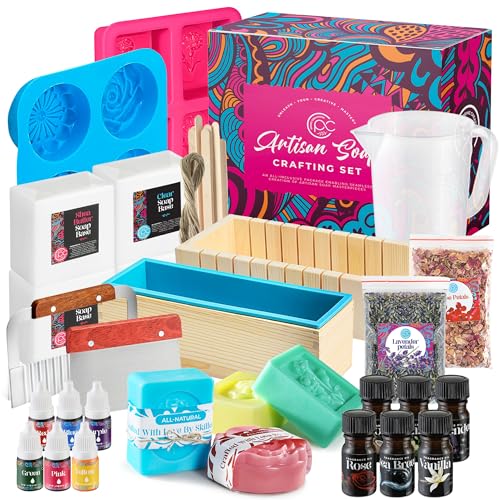
- Includes 4 pounds of soap base
- Six colors and six fragrances
- Packaging and cutting tools included
Best For: Larger classes and multi-session soap projects
Best for Simple Introductions

- Pre-cut melt-and-pour soap base
- Six-cavity silicone mold
- Primary colors and orange essential oil
Best For: Teen learners and small introductory classroom activities
Best for Themed Activities

- Four unicorn and rainbow-themed molds
- Ten soap base blocks and four colors
- Includes scents, glitter, tray, and tools
Best For: Younger classroom groups doing colorful themed STEM crafts
Fast Melt-and-Pour Pick

- Pre-cut goat milk base avoids knife work
- Six scents and six colors for customization
- Includes reusable molds and 10 gift boxes
Best For: Beginner classroom groups needing a quick, creative soap activity
STEM Activity Leader
3-in-1 Soap and Bath Science Kit

- Combines soap, bath bombs, and bath salts
- Includes an illustrated learning guide and tools
- Designed for children ages 6–12
Best For: Structured elementary science and craft activities
Presentation-Friendly Choice
Floral Soap Making Supplies Kit

- Includes rose and lavender petals
- Four scents, four dyes, and a silicone mold
- Provides 14 wrappers and craft twine
Best For: Small-group projects with decorated, gift-ready soaps
Best Classroom Pick

- 16 flower and butterfly molds
- Includes bases, colors, scents, and instructions
- Reusable silicone molds for future projects
Best For: Elementary classrooms and small-group activities
Best Variety Set

- Two soap bases and six molds
- Four dyes, fragrances, glitter, and dried petals
- Includes mesh bags for finished soaps
Best For: Customizable workshops with teens or adults
Best Deluxe Workshop Set

- 61-piece set with four soap bases
- Includes cutters, loaf and floral molds
- 25 wrappers support finished-soap packaging
Best For: Adult education and structured workshop classes
Best for Creative Variety – Multi-Shape Kids Soap Kit
For classrooms looking for soap making kits for classrooms with plenty of creative options, the FunKidz kit combines eight themed molds, colors, scents, glitter, and gift boxes. The melt-and-pour process is designed to produce soaps in about 30 minutes, making it practical for guided group activities.
Best For: Elementary and middle-school classroom projects focused on creativity, color mixing, and hands-on STEM activities.
Pros:
- Includes eight shapes, including unicorn, dinosaur, car, heart, and smiling-face designs.
- Supplies are intended to make at least 40 soaps across multiple designs.
- Supports color mixing, layered designs, scented soaps, and gift-box presentation.
- Includes instructions and enough supplies to share during group activities.
Cons:
- The kit requires heated soap liquid, so adult supervision and classroom safety procedures are necessary.
- The many design possibilities may require advance organization of materials for a class.
Its large supply count and wide range of shapes make this a flexible choice for classrooms that want students to experiment with both soap design and color combinations.
Best for Large Group Projects – Complete Melt-and-Pour Soap Set
This large soap making kit is a strong option among soap making kits for classrooms when material quantity and presentation matter. It includes 4 pounds of soap base, multiple molds, six fragrances, six dye colors, cutters, packaging supplies, and a handbook for structured crafting sessions.
Best For: Larger classroom groups, extended projects, or activities where students can make and package finished soap bars.
Pros:
- Provides 4 pounds of soap base and 113 listed pieces for a substantial project.
- Offers six fragrances and six dye colors for varied combinations.
- Includes a loaf mold, assorted silicone molds, cutters, pitcher, and cutting box.
- Packaging materials include wrappers, twine, and shrink bags for finished projects.
Cons:
- The larger set may require more storage and preparation than a compact student kit.
- Cutters and heated melt-and-pour materials call for close adult supervision.
- Its broad component list may be more than needed for a short class period.
With its unusually extensive supply list, this set is suited to teachers planning a multi-session activity or a class project that ends with individually packaged soap gifts.
Best for Simple Introductions – Beginner Soap Making Kit
Teachers seeking straightforward soap making kits for classrooms may appreciate this compact beginner set. It focuses on the basic melt, color, scent, and pour process, with a six-cavity mold and step-by-step instructions that can help students follow a clearly defined activity.
Best For: Small groups, teen learners, or classroom demonstrations introducing soap crafting fundamentals.
Pros:
- Includes pre-cut clear soap base designed to melt quickly and smoothly.
- Three primary colorants support basic color-mixing exercises.
- Includes orange essential oil for scented soap projects.
- Compact component list is easy to explain and organize for beginners.
Cons:
- Only one six-cavity mold is included, which may limit simultaneous student use.
- The product notes identify the age range as teen, making it less suitable for younger elementary classes.
- It includes fewer design and packaging supplies than larger classroom sets.
This is a sensible starter choice when the instructional goal is learning the core soap-making sequence rather than producing a large variety of shapes or finished gifts.
Best for Themed Activities – Unicorn Soap Making Kit
For themed soap making kits for classrooms, the Klever Kits unicorn set gives students a focused project built around colorful molds, layered designs, and kid-friendly scents. Its tray, beaker, pop sticks, trimming tool, and instructions support a guided activity for children ages six and up.
Best For: Elementary classroom groups that enjoy unicorn themes, colorful crafts, and introductory STEM activities.
Pros:
- Includes four themed molds for unicorn, rainbow, unicorn horn, and heart designs.
- Provides 10 soap base blocks, four colors, two scents, and glitter.
- Supports layered and multi-colored soap designs with an approximately 45-minute setting time.
- Includes child-oriented tools, a working tray, and an easy-to-follow instruction guide.
Cons:
- The unicorn theme may be less appealing for students seeking neutral or broader design choices.
- Four molds provide less variety than some multi-shape classroom kits.
- Heated soap-making steps still require adult handling and supervision.
This kit works well when engagement is the priority: the recognizable theme and manageable component list can make a structured classroom soap activity feel especially inviting.
Fast Melt-and-Pour Pick – Goat Milk Soap Making Kit
For classrooms seeking soap making kits for classrooms with a quick setup, this melt-and-pour set emphasizes pre-cut goat milk soap cubes and an all-in-one supply list. It includes multiple scents, colors, reusable silicone molds, and gift boxes, though adult supervision is still appropriate when melting and pouring.
Best For: Beginner classroom groups that want colorful handmade soaps without knife-based cutting or extensive preparation.
Pros:
- Pre-cut soap cubes eliminate the need to chop the base.
- Includes 2 pounds of goat milk soap base, six fragrances, and six dyes.
- Reusable silicone molds are designed for easier soap removal.
- Ten gift boxes support classroom sharing or presentation.
Cons:
- The notes do not specify the exact number of soap molds or finished bars.
- Melting and pouring require appropriate adult supervision.
This is a practical option when speed, variety, and simple portioning matter most. The pre-cut base can streamline a group activity, while the scent and color combinations give students room for creative choices.
STEM Activity Leader – 3-in-1 Soap and Bath Science Kit
This 3-in-1 kit is one of the more lesson-oriented soap making kits for classrooms, combining soap, bath bomb, and bath salt projects. Its illustrated learning guide, beakers, molds, colorings, and other tools can support a structured activity for children ages 6–12, with adult oversight for mixing and handling materials.
Best For: Elementary-age classroom activities that connect hands-on crafting with simple science concepts and multiple project types.
Pros:
- Supports soap, bath bomb, salt scrub, and fizzy bath salt projects.
- Includes an illustrated learning guide and a broad selection of tools.
- Designed for creating up to 10 soaps and 10 bath bombs, according to the product notes.
- STEM.org Authenticated and supplied with colorings, fragrances, molds, and decorative items.
Cons:
- Its many activities may require more classroom preparation and supervision.
- The kit is intended for children ages 6–12, so younger students may need additional assistance.
- Some included materials are single-use consumables.
Choose this set when educational variety is more important than a streamlined soap-only project. It offers the strongest curriculum-friendly format of the three, but teachers should plan stations, instructions, and supervision around its larger assortment of ingredients and tools.
Presentation-Friendly Choice – Floral Soap Making Supplies Kit
This floral-themed set is a flexible choice among soap making kits for classrooms, offering melt-and-pour supplies plus rose and lavender petals for decoration. With 2 pounds of soap base, four scents, four dyes, a four-section silicone mold, and 14 wrappers, it can work well for small groups or projects that end with individually presented soaps.
Best For: Classroom craft sessions focused on decorating, fragrance selection, and wrapping finished soap bars as gifts or take-home projects.
Pros:
- Includes 2 pounds of soap base, four fragrances, and four dye colors.
- Rose and lavender petals add a hands-on floral embellishment option.
- Four-section silicone mold supports making multiple bars in a batch.
- Includes 14 soap wrappers and craft twine for presentation.
Cons:
- The notes do not identify a dedicated classroom lesson guide beyond the handbook instructions.
- Only four mold sections may require multiple rounds for larger groups.
- Melting and pouring still need adult supervision.
This kit stands out when the finished presentation matters as much as the making process. Its petals, wrappers, and twine add a gift-making angle, while the moderate assortment of colors and fragrances keeps the activity approachable.
Best Classroom Pick – Flower & Butterfly Soap Kit
For classrooms seeking soap making kits for classrooms with an approachable, kid-friendly format, this set offers 16 themed silicone molds and simple melt-and-pour steps. Students can explore colors, scents, and basic changes in materials while creating individual soaps.
Best For: Elementary-age classroom activities, small-group projects, and gift-making lessons for children ages 5-12.
Pros:
- Includes 16 flower and butterfly molds for multiple student creations.
- Provides white and clear soap bases, colors, essential oil scents, glitter, and a foaming net.
- Picture instructions support beginner-friendly melt-and-pour use.
- Reusable silicone molds can be washed and used with future base refills.
Cons:
- The floral theme may be less suitable for classes wanting varied mold shapes.
- The listed age range is focused on children ages 5-12, so younger students may need close supervision.
This is a practical choice when a teacher wants many themed molds and an easy activity structure. Its 16-soap capacity can help distribute participation across a classroom, although additional soap base may be needed for repeat sessions.
Best Variety Set – JCOOS Soap Making Kit
This JCOOS set is a flexible option among soap making kits for classrooms, combining two soap bases with six molds, four dyes, four fragrances, glitter, and dried petals. Its broad assortment supports creative mixing and a more open-ended group activity.
Best For: Teen or adult-led classroom workshops, mixed-age groups, and projects focused on customization and presentation.
Pros:
- Includes clear glycerin and shea butter soap bases for two finished-soap styles.
- Six silicone molds, four dyes, four fragrances, and two glitters encourage experimentation.
- Dried rose and lavender petals add decorative options.
- Mesh packing bags provide a way to package completed soaps as gifts.
Cons:
- The product details identify the age range as adult, so younger students may require substantial supervision.
- With six molds, larger classes may need students to work in rotating groups.
The kit’s variety makes it useful for lessons where students compare colors, scents, textures, and packaging. Teachers should plan group rotations around the six molds and account for the included fragrance and glitter options when setting classroom guidelines.
Best Deluxe Workshop Set – CraftZee Large Soap Kit
For instructors planning a more structured soap-making workshop, this deluxe set supplies loaf molds, floral molds, cutters, wrappers, fragrance oils, dyes, and four melt-and-pour bases. It is one of the more equipment-rich soap making kits for classrooms, but its adult-oriented format makes supervision and preparation important.
Best For: Adult education, advanced craft classes, family workshops, and classroom projects that include cutting and wrapping finished soap.
Pros:
- Includes four soap bases, six fragrance oils, and six liquid dyes.
- Provides a silicone loaf mold, two floral molds, and wavy and straight cutters.
- Includes a soap cutter box, pitcher, stirring sticks, 25 wrappers, and instructions.
- The 61-piece set supports multiple stages from mixing through packaging.
Cons:
- The listed age range is adult, making it less immediately suited to young elementary students.
- Loaf molds and cutters may require more preparation and supervision than simple individual molds.
- Only two floral molds are included, so larger groups may need to share equipment.
This kit is strongest when the lesson includes design, molding, cutting, and presentation rather than a quick one-step craft. Its extensive accessories can support a workshop format, while the adult age designation suggests that instructors should manage hot-melt handling and cutting carefully.
How We Picked These Soap Making Kits for Classrooms
We focused on kits that offer a practical starting point for group projects rather than collections of molds or fragrances alone. Key considerations included the completeness of the kit, variety of molds, clarity of the intended age range, beginner-friendly ingredients, and how easily students can make individual take-home soaps.
We also considered different classroom needs: simple craft sessions for younger children, STEM demonstrations, creative electives, and more advanced workshops for teens or adults. Because melting soap typically requires heat, every option should be used with close adult supervision and according to the manufacturer’s instructions.
Quick Comparison
| Classroom need | Look for | Best kit style |
|---|---|---|
| Younger students | Simple steps, colorful molds, clear age guidance | Kid-focused or themed kits |
| STEM lessons | Measurable ingredients, repeatable batches, flexible molds | Complete melt-and-pour kits |
| Large groups | Generous base supply and multiple molds | Deluxe or large-format kits |
| Creative projects | Several scents, colors, and shape options | Multi-accessory craft kits |
| Older beginners | More control over formulas and finishing | Adult, teen, or beginner kits |
Key Buying Factors for Soap Making Kits for Classrooms
Material Quantity and Group Size
Check the total soap-base weight and compare it with the number of students. A kit may be marketed as complete but still provide enough material for only a few small bars. For a full class, consider buying multiple kits or adding compatible melt-and-pour base separately.
Safety and Supervision
Choose a setup that fits your classroom equipment. Melt-and-pour soap must be heated, so teachers should handle microwaves, hot containers, and cutting tools when appropriate. Look for clear instructions, easy-to-handle molds, and projects that allow students to observe or assist safely.
Age Suitability and Learning Goals
Themed children’s kits can make participation easier for younger learners, while flexible beginner kits may work better for older students studying ratios, textures, scent blending, or product design. Confirm that the included fragrances and colorants are intended for soap use.
Cleanup and Storage
Silicone molds are generally convenient to release and wash, while cutting boxes and loaf molds may require additional preparation. Favor kits with resealable packaging or plan labeled containers so unused base and accessories do not become mixed between groups.
Who Should Buy Which Soap Making Kits for Classrooms?
For elementary classrooms, choose a kid-focused or themed kit with uncomplicated instructions and engaging shapes. For science classes, a complete melt-and-pour set with measuring, coloring, and mold options offers more opportunities to discuss changes of state and controlled variables. Teachers serving larger groups should prioritize deluxe kits with extra base, multiple molds, or the ability to produce several batches.
For clubs, homeschool groups, and older beginners, adult-oriented goat milk or flexible beginner kits may provide a more substantial project. If the main goal is a polished craft students can take home, prioritize varied molds and fragrances. If the lesson matters most, prioritize material quantity, repeatability, and clear safety instructions over decorative extras.