Finding the right screen printing press for a home workshop depends on more than color count. Workspace, print size, setup effort, and registration control all affect how easily you can produce clean, repeatable designs.
We selected 10 options ranging from compact one-color presses and essential accessories to larger multi-color machines, helping beginners, hobbyists, and small apparel businesses find a practical fit.
Best 10 Screen Printing Presses for Home Workshops Picks for 2026
Compact Multi-Color Pick

- Four-color rotating design
- Double-layer positioning stops
- 21.2-by-17.7-inch print area
Best For: Home printers and small businesses making multicolor flat designs
Beginner Vinyl Starter
Speedball Craft Vinyl Screen Printing Kit
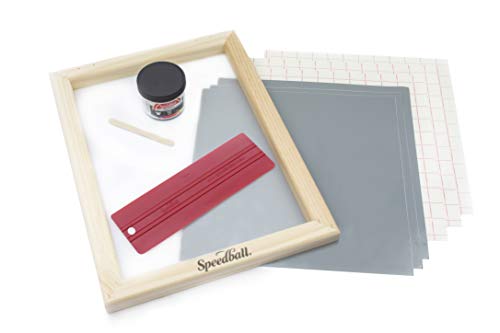
- Uses a home vinyl cutter
- No emulsion or screen filler needed
- Includes frame, squeegee, ink, and vinyl
Best For: Beginners creating simple custom apparel and home decor
All-in-One Single-Color Kit
VEVOR 1-Color Press with Frames

- Includes two aluminum screen frames
- Comes with basic printing accessories
- Adjustable spring supports different screens
Best For: Single-color projects needing a more complete starter bundle
Adjustable Manual Workhorse
INTBUYING 1-Color Manual Press

- 22-by-18-inch printing area
- Adjustable clamp and platen
- Double springs balance screen weights
Best For: One-color users who already own or will buy a screen frame
Best Budget Upgrade
Butterfly Hinge Screen Printing Clamps

- Positive locking helps stabilize screens
- Chrome-plated construction resists rust
- Includes two clamps and four screws
Best For: DIY press builders and basic home setups
Best Heavy-Duty Option

- Steel construction supports durable manual printing
- Double positioning helps reduce alignment errors
- Handles garments and many flat materials
Best For: Home users and small businesses needing a sturdier press
Best for Multi-Color Production
6-Color 6-Station Screen Printing Press

- Six-color, six-station manual layout
- Adjustable 28–35-inch stand
- 360-degree holders and all-metal build
Best For: Dedicated home workshops and small printing businesses
Best Compact Pick
VEVOR 4-Color 1-Station Screen Printing Press

- Workbench-mounted compact design
- Four-color printing with 360-degree rotation
- 21.3 x 17.7-inch printing area
Best For: Space-conscious DIY users and small businesses
Best for Shared Workspaces

- Four-color, four-station configuration
- 360-degree rotation with positioning system
- Durable steel construction and powder-coated finish
Best For: Home workshops needing more capacity in a bench-mounted format
Compact Multi-Color Pick – VEVOR 4-Color 1-Station Press
For home workshops seeking screen printing presses for home workshops with more color flexibility, this VEVOR model combines four color positions with a single rotating station. Its 21.2-by-17.7-inch printing area and compact footprint suit limited spaces, though the base needs to be secured to a workbench.
Best For: DIY artists, occasional printers, and small businesses producing multicolor designs on flat materials.
Pros:
- Four-color, one-station layout with a 360-degree rotatable fuselage.
- Double-layer positioning helps reduce registration deviation.
- Supports clothing, bags, fabrics, paper, wood, glass, ceramics, leather, and other flat materials.
- Cold-rolled steel construction with stainless steel components.
Cons:
- Requires screws and a suitable workbench for stability.
- A single station may be slower for larger production runs.
- Its 40-pound weight can make repositioning inconvenient.
This is a practical choice when color capability matters more than production speed. The rotating design and positioning stops are useful in a home setup, provided you have a permanent or semi-permanent work surface.
Beginner Vinyl Starter – Speedball Craft Vinyl Screen Printing Kit
Unlike full screen printing presses for home workshops, this Speedball kit is a low-complexity way to combine vinyl cutting and screen printing. It uses a home vinyl cutting machine rather than screen filler or emulsion, making it suitable for straightforward custom projects.
Best For: Beginners making custom T-shirts and home decor with a vinyl cutting machine.
Pros:
- Quick process designed for home use.
- No screen fillers or emulsion chemicals are needed.
- Vinyl can be removed from the screen for multiple images.
- Includes a 10-by-14-inch wood frame, squeegee, black fabric ink, vinyl, transfer tape, and instructions.
Cons:
- Requires a compatible home vinyl cutting machine.
- Offers less traditional press functionality than a manual machine.
- The included black ink limits the starting color selection.
This kit is best viewed as an accessible entry point rather than a production press. It keeps the process simple and avoids chemical screen preparation, but users wanting repeatable multicolor or higher-volume printing will need a more complete press setup.
All-in-One Single-Color Kit – VEVOR 1-Color Press with Frames
For shoppers comparing screen printing presses for home workshops, this VEVOR package adds useful starter accessories to a one-color, one-station metal press. It includes two aluminum frames, screens, tapes, films, mixing sticks, and scraping tools for a more complete initial setup.
Best For: Home users or small commercial printers who want a single-color press with included screens and basic accessories.
Pros:
- Includes 8-by-10 and 10-by-14-inch aluminum screen frames.
- Package includes an ink knife, squeegee, scrapers, films, tapes, and mixing sticks.
- Metal construction uses electrostatic spraying and electroplating.
- Adjustable spring device accommodates screens of different sizes and weights.
Cons:
- Limited to one color and one station.
- Included frame sizes are smaller than the 21.2-by-17.7-inch platen.
- Screen washing agent is not listed among the included accessories.
This package makes sense for buyers who prefer a press-and-accessories bundle over purchasing components separately. Its one-color format is straightforward, while the included frames help get smaller projects underway without adding as many initial purchases.
Adjustable Manual Workhorse – INTBUYING 1-Color Manual Press
This INTBUYING model is a straightforward option among screen printing presses for home workshops, with a 22-by-18-inch printing area and adjustable components for different frames. Its steel construction is designed for manual use, but the machine must be screwed to a table and the screen frame is not included.
Best For: Home or small commercial users printing one-color designs who already have, or plan to source, a compatible screen frame.
Pros:
- Adjustable screen clamp handles frames up to 2 inches thick.
- Platen adjusts forward and backward by up to 10 cm.
- Double springs help balance screens of different weights.
- Steel plate construction with an electrostatic-spray finish is designed for durability and easy cleaning.
Cons:
- Limited to one color and one station.
- Requires table mounting with screws.
- Screen frame is not included.
This press favors adjustability and a relatively light 18.9-pound listed weight over bundled accessories. It can be a sensible foundation for repeat one-color work, but budget for a compatible frame and a secure workbench before printing.
Best Beginner Pick – Caydo 1-Color 1-Station Press
For shoppers comparing screen printing presses for home workshops, the Caydo is a compact, beginner-friendly option with a wood structure, straightforward setup, and alignment features designed for DIY garment printing.
Best For: Beginners and hobbyists printing t-shirts and other garments at home.
Pros:
- Hinge design lets the wood frame lift and hover for easier, more precise operation.
- Base groove and centerline help stabilize and align garments.
- Accommodates 10×14-inch, 8×12-inch, and 6×10-inch frames.
- Compact 6.96-pound wood construction is suited to home creative projects.
Cons:
- One-color, one-station format is intended for relatively simple print setups.
- Wood construction may be less suitable for demanding commercial workloads than a metal press.
The Caydo stands out when easy operation and flexible frame sizing matter more than production capacity. Its alignment groove and beginner-oriented design make it a practical starting point for home garment printing.
Best Budget Upgrade – Butterfly Hinge Screen Printing Clamps
These butterfly hinge clamps are a useful accessory for screen printing presses for home workshops, especially if you already have a work surface or frame and need a simple way to secure the screen for repeatable printing.
Best For: Beginners and DIY users building or upgrading a basic screen printing setup.
Pros:
- Positive-locking hinge design helps keep the screen stable during printing.
- Chrome-plated material is described as sturdy and rust-resistant.
- Includes two clamps and four screws for installation.
- Compact size takes up little workspace.
Cons:
- This is a clamp accessory rather than a complete screen printing press.
- Users must provide a suitable frame, printing surface, and other equipment.
Choose these clamps when you want a low-cost way to add screen-holding hardware to a DIY press. They are best viewed as a component for a home setup, not an all-in-one printer.
Best Heavy-Duty Option – VEVOR 1-Color 1-Station Press
For home workshops that need a more substantial platform, the VEVOR is a 1-color, 1-station press with a 21.2 x 17.7-inch printing area, metal construction, and positioning stops designed to support consistent manual printing.
Best For: DIY artists and small businesses printing garments or other flat materials.
Pros:
- Cold-rolled steel frame with carbon steel springs and a 304 stainless steel rod is built for durability.
- Double-layer positioning design and arm stops help reduce print deviation.
- Supports clothing, fabrics, paper, wood, glass, ceramics, leather, and other flat materials.
- Relatively space-conscious design suits home use and occasional printing.
Cons:
- At 24.4 pounds, it is considerably heavier than a small wood press.
- Manual, monochrome operation limits it to one color at a time.
- Installation is required.
The VEVOR is the stronger choice for users who prioritize a rigid metal build, a larger work area, and broader material compatibility. Its single-station design remains best suited to manual home or small-scale production.
Best for Multi-Color Production – 6-Color 6-Station Screen Printing Press
For home workshops handling larger or more involved jobs, this six-station press offers room for six-color overprinting while keeping manual operation straightforward. Its adjustable stand and metal construction make it a substantial option among screen printing presses for home workshops.
Best For: Small businesses, individual printing shops, and home workshops producing multicolor T-shirt designs.
Pros:
- Six color and six station layout supports multicolor overprinting.
- 360-degree rotating screen holders and locating detents help with color matching and positioning.
- Adjustable stand height from 28 to 35 inches.
- All-metal construction with corrosion- and rust-resistant finishes.
Cons:
- Its fully assembled dimensions of 70 x 70 x 43 inches require substantial workshop space.
- The manual setup and assembly process may take more time than a compact press.
This is the most production-oriented choice in the group, but its size makes it better suited to a dedicated workshop area than a temporary tabletop setup.
Best Compact Pick – VEVOR 4-Color 1-Station Screen Printing Press
This compact VEVOR press is designed to mount on a workbench, making it a practical fit for screen printing presses for home workshops with limited floor space. Its 360-degree rotary body and positioning stops support repeatable manual printing.
Best For: DIY users and small businesses printing multicolor designs on a workbench.
Pros:
- Compact four-color, one-station design with a 21.3 x 17.7-inch printing area.
- 360-degree rotation and independent metal bearings support smooth operation.
- Positioning stop blocks under each arm help reduce deviation.
- Supports flat materials including T-shirts, bags, pillowcases, paper, wood, glass, and leather.
Cons:
- It must be mounted to a workbench for added stability.
- One station is less suited to simultaneous multi-item production.
Choose this model when conserving space matters more than maximizing throughput. Its compact footprint and broad material compatibility make it approachable for home-based printing projects.
Best for Shared Workspaces – VEVOR 4-Color 4-Station Press
With four stations in a workbench-mounted format, this VEVOR model balances multicolor capability with a relatively space-conscious design. It is a strong candidate for screen printing presses for home workshops that need more station capacity without moving to a larger floor-standing machine.
Best For: Home users, DIY artists, and small businesses printing multicolor designs on flat materials.
Pros:
- Four-color, four-station configuration supports a more efficient workflow.
- 360-degree rotatable fuselage with independent metal bearings.
- Double-layer positioning design helps reduce printing deviation.
- Cold-rolled steel construction, powder-coated finish, carbon steel springs, and 304 stainless steel rods.
Cons:
- The 77.6-pound weight makes it less convenient to move frequently.
- It needs to be screwed to a workbench for stability.
- Its four-station layout still requires dedicated bench space.
This press is a sensible middle ground: it offers more station capacity than a one-station unit while remaining intended for bench mounting. Confirm that your workspace can support its weight and footprint before buying.
How We Picked the Best Screen Printing Presses for Home Workshops
We compared the selected presses and accessories by station and color capacity, frame compatibility, footprint, adjustability, construction, and suitability for common home projects such as T-shirts, tote bags, posters, and small apparel runs. We also considered whether a model is appropriate for beginners or better suited to users who already understand screen preparation, ink handling, curing, and registration.
Because home workshops vary widely, the list includes compact manual presses, expandable multi-color machines, replacement-style clamps, and a beginner vinyl-based kit. Product specifications can vary by seller, so verify included frames, pallets, clamps, and hardware before ordering.
Quick Comparison
| Type | Best For | Main Advantage |
|---|---|---|
| 1-color, 1-station press | Beginners and simple designs | Lower cost and easier setup |
| 4-color, 1-station press | Layered designs in limited space | More color capability without multiple pallets |
| 4-color, 4-station press | Repeatable multi-color apparel work | Faster registration and production flow |
| 6-color, 6-station press | Higher-volume small businesses | Greater throughput and color capacity |
| Clamps or vinyl kit | Existing setups or craft projects | Useful accessories or a lower-barrier entry point |
Key Buying Factors for Screen Printing Presses for Home Workshops
Color and Station Capacity
A one-color press is usually the simplest starting point and works well for single-ink graphics. Multi-color presses reduce the need to unload and realign screens, but they require more room and more careful registration. Station count also affects workflow: multiple pallets let you load garments while another print is being pulled.
Workspace and Print Dimensions
Measure both the machine footprint and the clearance needed to rotate arms, load garments, and move around the press. Check the maximum screen or print area against your projects. A large press may be unnecessary for occasional shirts but valuable for oversized graphics or broader substrate choices.
Registration and Adjustability
For layered designs, look for adjustable screen holders, stable hinges, accurate positioning, and a rigid base. Small alignment errors become obvious when colors overlap. Rotatable arms can improve workflow, while removable or adjustable pallets may make loading different garments easier.
Materials and Included Equipment
Confirm whether frames, mesh screens, pallets, clamps, tape, and mounting hardware are included. Aluminum frames can be lighter and durable, while additional screens increase flexibility but also raise preparation and storage needs.
Setup, Cleaning, and Curing
Manual presses still require screen coating or stencil preparation, squeegees, ink management, washing, and a reliable curing method. Plan for ventilation, a washable work surface, and storage for wet screens and finished garments. A press is only part of the complete printing setup.
Who Should Buy Which Screen Printing Presses for Home Workshops?
Choose a One-Color Press If You Are Starting Out
Beginners, casual crafters, and users with limited space should generally choose a compact one-color, one-station model. It offers the simplest learning curve and is adequate for single-color logos, labels, and basic apparel projects.
Choose a 4-Color, 1-Station Model for Versatility
These presses suit hobbyists who want multicolor capability without committing to a large multi-station footprint. They are a practical middle ground for varied projects and occasional small batches.
Choose a Multi-Station Press for Production
A 4-color, 4-station or 6-color, 6-station press makes more sense for sellers, clubs, and small apparel businesses producing repeated designs. Before buying, make sure your space, drying method, screen inventory, and registration skills can support the added capacity.
Choose Accessories or a Craft Kit for a Low-Cost Trial
Clamps can help users build or repair a basic setup, while a vinyl kit may suit simple home-decor and T-shirt projects without immediately investing in a full press. These options are best when portability, experimentation, or a small project volume matters most.